Cold water can quickly turn a surf session, dive, or open-water swim into an uncomfortable—and potentially unsafe—experience. The right wetsuit helps retain body heat while giving you enough flexibility to move naturally.
We selected 10 wetsuits spanning common thicknesses, seam constructions, zipper styles, and use cases. Use the guide below to narrow your choice by water temperature, activity, fit, and insulation needs.
Best 10 Wetsuits for Cold Water Picks for 2026
Best All-Around Warmth

- 4/3mm neoprene balances warmth and mobility
- Sealed seams help reduce water entry
- Reinforced knees support active use
Best For: Men seeking a versatile suit for multiple water sports
Best Women’s Stretch Fit
Owntop Women’s 4mm Full Wetsuit

- 4mm neoprene helps retain body heat
- GBS seams limit flushing and heat loss
- Stretch panels support unrestricted movement
Best For: Women wanting flexible full-body coverage for cold-water activities
Best Entry-Level Flexibility
O’Neill Reactor-2 3:2mm Wetsuit

- Lightweight 3:2mm warmth for recreational use
- Ultra-stretch neoprene improves flexibility
- Smoothskin panels add wind protection
Best For: Beginners and recreational users in milder cold-water conditions
Best Maximum Insulation
DEHAI Men’s 5mm Thermal Wetsuit

- Thick 5mm neoprene emphasizes warmth
- Reinforced knees and shins add protection
- Adjustable wrist and ankle zippers improve sealing
Best For: Men prioritizing insulation and coverage for active water sports
Flexible 3mm Protection

- Designed for water around 55°F and above
- 2mm sleeves improve flexibility
- Knee pads and UV 50+ protection
Best For: Moderately cool-water diving, snorkeling, surfing, and kayaking
Maximum Warmth Focus

- 5mm neoprene body targets colder water
- GBS seams help reduce water flushing
- Front zip and stretch panels aid mobility
Best For: Longer cold-water surfing, diving, snorkeling, and paddling sessions
Fit-Range Choice

- 3/2mm neoprene balances warmth and flexibility
- Front zipper eases entry and exit
- 16 regular, short, and tall size options
Best For: Multi-sport users prioritizing fit options and versatility
Best Overall Cold-Water Pick
Mares M-Flex 7 mm Full Body Wetsuit

- 7 mm neoprene for cold-water insulation
- Ultra-stretch material supports mobility
- Streamlined, minimalist full-body design
Best For: Adult divers seeking warmth with flexible movement
Best for Winter Value
Men's Ultra Stretch 7 mm Front-Zip Wetsuit

- 7 mm suit for water below 53.6°F
- Front zipper simplifies entry and removal
- Full-body coverage with UV protection
Best For: Cold-water users wanting warmth and front-zip convenience
Best for Milder Cold Water
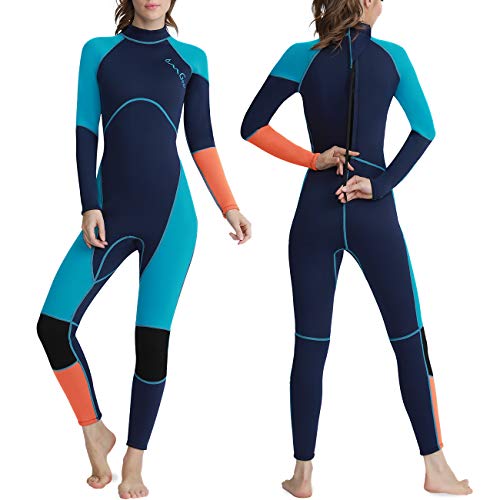
- 3 mm neoprene for 60°F-plus water
- UPF 50+ UV protection
- Back zipper and flexible construction
Best For: Multi-sport users in moderately cool water
Best All-Around Warmth – Hevto Men 4/3mm Full Wetsuit
If you want wetsuits for cold water that balance insulation, mobility, and versatility, the Hevto men’s full suit is a practical option. Its 4/3mm neoprene construction, stretch nylon, sealed seams, and reinforced knees suit a range of water activities.
Best For: Men who need one full wetsuit for surfing, diving, snorkeling, swimming, paddleboarding, or jet skiing.
Pros:
- 4/3mm neoprene and super-stretch nylon provide warmth with flexibility.
- Glued, sealed, blind-stitched seams help reduce water entry.
- Reinforced knees add protection for active water sports.
- Back zipper and upgraded puller simplify entry and exit.
Cons:
- Only one listed thickness and size configuration may limit fit options.
- Back-zip designs may allow more water entry than some specialized closures.
The Hevto stands out as a versatile cold-water suit with useful durability details and buoyancy support. Check the size chart carefully for the best fit.
Best Women’s Stretch Fit – Owntop Women’s 4mm Full Wetsuit
For shoppers comparing wetsuits for cold water, the Owntop women’s full suit emphasizes warmth, stretch, and reduced flushing. Its 4mm neoprene build and glued-and-blind-stitched seams are designed for diving, surfing, swimming, and other active use.
Best For: Women who prioritize flexible movement, full-body coverage, and a more comfortable neckline and cuff design.
Pros:
- 4mm neoprene helps retain body heat in cold water.
- GBS seams reduce water flushing and heat loss.
- Stretch panels support paddling, swimming, and underwater movement.
- Raw-edge neckline and rolled cuffs help reduce chafing.
Cons:
- The back zipper may be less convenient for independent entry than a front-zip design.
- There is no warranty listed in the supplied product details.
Owntop is a strong fit for women wanting warmth without giving up flexibility. The extended zipper pull is a useful touch when changing alone or while wearing gloves.
Best Entry-Level Flexibility – O’Neill Reactor-2 3:2mm Wetsuit
The O’Neill Reactor-2 is a practical choice among wetsuits for cold water when lightweight warmth and easy movement matter. Its 3:2mm design, ultra-stretch neoprene, water-resistant back zip, and smoothskin panels are aimed at recreational water activities.
Best For: Beginners and recreational users who want a flexible full suit for surfing, paddleboarding, kayaking, diving, or lake activities.
Pros:
- 3:2mm construction provides lightweight warmth.
- Ultra-stretch neoprene supports flexibility and comfort.
- Seamless paddle zones promote mobility.
- Smoothskin panels add wind resistance and insulation.
Cons:
- Its 3:2mm construction is lighter than the 4mm and 5mm alternatives here.
- The supplied details list a specific large-size measurement range, so fit should be checked carefully.
The Reactor-2 favors comfort and movement over maximum thickness. It makes sense for milder cold-water conditions or users who prefer a less bulky entry-level suit.
Best Maximum Insulation – DEHAI Men’s 5mm Thermal Wetsuit
Among wetsuits for cold water, the DEHAI men’s full suit offers the thickest listed neoprene at 5mm. It combines a thermal lining, sealed construction, reinforced knees and shins, and adjustable wrist and ankle zippers for diving and other demanding water activities.
Best For: Men seeking substantial insulation and protective features for scuba diving, snorkeling, surfing, kayaking, spearfishing, or swimming.
Pros:
- 5mm neoprene provides substantial cold-water insulation.
- Three-layer fabric and a smooth-skin interior support warmth and comfort.
- Reinforced knees and shins improve protection and durability.
- Wrist and ankle zippers allow adjustability and a tighter water seal.
Cons:
- Thicker 5mm construction may feel less flexible than thinner suits.
- The supplied temperature rating is 68°F, so suitability for colder conditions should be verified.
- The product notes advise consulting the size chart rather than choosing a usual clothing size.
DEHAI is the most insulation-focused option in this group, with useful coverage and reinforcement for active use. Its thickness and fit guidance make careful sizing especially important.
Flexible 3mm Protection – Men's 3mm Full Wetsuit
For shoppers comparing wetsuits for cold water, this 3mm full suit is designed for conditions around 55°F and above. Its neoprene construction, warmer chest panel, flexible sleeves, and flatlock seams make it a practical choice for several water sports.
Best For: Diving, snorkeling, surfing, kayaking, and swimming in moderately cool water.
Pros:
- 3mm neoprene body with a 3mm chest panel helps retain body heat.
- 2mm sleeves support greater flexibility during movement.
- Back zipper, long pull rope, and adjustable Velcro closure simplify entry and fit adjustment.
- Anti-abrasion knee pads and UV 50+ protection add useful recreational-sport features.
Cons:
- The 55°F rating makes it less suitable for substantially colder water than a thicker suit.
- Back-zip designs may be less convenient to self-dress than front-zip alternatives.
This is a versatile, travel-friendly option for moderate cold-water sessions. Choose it when flexibility and broad activity use matter more than maximum insulation.
Maximum Warmth Focus – Owntop Men's 5mm Wetsuit
Among wetsuits for cold water, the Owntop 5mm suit emphasizes insulation and reduced water flushing. Its thicker neoprene body, GBS seams, adjustable neck, and stretch panels are suited to longer sessions in cooler conditions.
Best For: Surfing, snorkeling, paddling, and diving when extra warmth and mobility are priorities.
Pros:
- 5mm neoprene body helps reduce heat loss in cold water.
- GBS seams, Lycra-trimmed openings, and an adjustable neck help limit water circulation.
- 4mm stretch panels at key areas support paddling, bending, and kicking.
- Diagonal front zipper makes self-entry faster than traditional back-zip designs.
Cons:
- The thicker 5mm construction may feel less flexible than a lighter suit in some movements.
- It is a more specialized choice for colder conditions rather than warm-water use.
This suit is the strongest warmth-oriented pick in the group. It balances substantial insulation with targeted stretch panels and durability features for repeated water adventures.
Fit-Range Choice – Hevto Men's 3/2mm Wetsuit
The Hevto 3/2mm full suit is a flexible option for shoppers seeking wetsuits for cold water across several activities. It combines neoprene insulation with a front zipper and offers 16 size options, including regular, short, and tall fits.
Best For: Multi-sport users who want flexible sizing for surfing, swimming, diving, snorkeling, kayaking, or paddleboarding.
Pros:
- 3/2mm neoprene construction balances warmth and flexibility.
- Front zipper with an upgraded puller supports easier entry and exit.
- Sixteen size options, including regular, short, and tall fits, broaden fit choices.
- Suitable for a wide range of water activities and includes a one-year manufacturer warranty.
Cons:
- The 3mm thickness provides less insulation than the Owntop 5mm suit for colder conditions.
- The supplied temperature rating is listed as 90°F, so it offers limited guidance for genuinely cold water.
This is a practical pick when fit availability and all-around versatility are especially important. For significantly colder water, consider whether its 3/2mm thickness provides enough insulation for your session.
Best Overall Cold-Water Pick – Mares M-Flex 7 mm Full Body Wetsuit
For divers comparing wetsuits for cold water, the Mares M-Flex combines 7 mm insulation with ultra-stretch neoprene and a streamlined full-body design. Its redesigned fit is intended to accommodate a range of body types while supporting comfortable movement.
Best For: Adult divers who want substantial insulation and flexible performance in chilly water.
Pros:
- 7 mm thickness is engineered for cold-water conditions.
- Ultra-stretch neoprene supports mobility and a snug fit.
- Streamlined cut may help reduce drag in the water.
- Minimal graphics create a clean, understated appearance.
Cons:
- The available listing details specify a small size, so careful sizing is important.
- Its 7 mm construction may feel warmer and less lightweight than thinner suits.
The M-Flex is a strong choice when thermal protection is the priority, especially for divers who also value stretch and a refined, low-drag profile.
Best for Winter Value – Men's Ultra Stretch 7 mm Front-Zip Wetsuit
This 7 mm front-zip suit is a practical option for shoppers seeking wetsuits for cold water at temperatures listed below 53.6°F. Stretch neoprene, nylon fabric, full-body coverage, and a long zipper strap are geared toward warmth, protection, and easier dressing.
Best For: Adult snorkelers, divers, and water-sports users who prioritize heavy insulation and convenient front entry.
Pros:
- 7 mm neoprene is rated for use below 53.6°F.
- Full-body, long-sleeve coverage helps protect against sun, sharp objects, bruises, and stings.
- Front zipper and long pull strap make the suit easier to put on and remove.
- Four-thread flatlock stitching is designed for flexibility and durability.
Cons:
- The seller notes that the suit runs small and recommends prioritizing weight when choosing a size.
- A new-suit adhesive odor may be noticeable initially.
- The close fit can feel tight when first worn.
Consider this model if you need substantial cold-water coverage and prefer front-zip convenience, but spend extra time checking the sizing guidance before ordering.
Best for Milder Cold Water – OMGear 3 mm Full Body Wetsuit
For milder conditions, this 3 mm OMGear suit offers a more flexible alternative among wetsuits for cold water. It is rated for water temperatures of 60°F and above and combines neoprene with stretchy nylon, UV protection, and a back zipper for broad water-sports use.
Best For: Adults and youth using one suit for swimming, surfing, snorkeling, scuba diving, kayaking, and similar activities in 60°F-plus water.
Pros:
- 3 mm construction balances warmth with flexibility.
- 90% neoprene and 10% stretchy nylon provide a soft, durable feel.
- UPF 50+ UV protection adds coverage during outdoor activities.
- Back zipper is designed to make putting the suit on and taking it off easier.
Cons:
- Its 60°F-plus temperature rating makes it less suited to very cold water than a 7 mm suit.
- The fit may feel tight initially, and taller or stronger users may need a larger size.
- The listing notes that a harmless glue odor may be present when new.
This is the better fit for moderate temperatures and varied recreational use, particularly when flexibility and UV coverage matter more than maximum insulation.
How We Picked the Best Wetsuits for Cold Water
We focused on the features that most directly affect warmth, comfort, and usability: neoprene thickness, seam construction, flexibility, zipper placement, coverage, and intended activity. The lineup includes accessible suits for recreational swimming and paddle sports, as well as thicker designs aimed at colder scuba-diving and winter conditions.
Because temperature tolerance varies by individual, these suits should be treated as starting points rather than guarantees. Wind, activity level, body composition, fit, and time spent in the water all influence how warm a wetsuit feels.
Quick Comparison
| Thickness | Best suited to | Main trade-off |
|---|---|---|
| 3/2mm | Mild to moderately cool water, surfing, swimming, and paddleboarding | Less insulation in genuinely cold conditions |
| 4mm–5/4mm | Cooler water, recreational diving, and longer sessions | More warmth with reduced flexibility |
| 7mm | Cold-water scuba diving and winter use | Bulkier, heavier, and more restrictive |
Key Buying Factors for Wetsuits for Cold Water
Thickness and Temperature
Thickness is the clearest indicator of insulation. A 3/2mm suit is generally more comfortable in cool rather than frigid water, while 5mm and 7mm suits are better suited to colder conditions. Check the manufacturer’s temperature guidance and local water conditions before buying.
Fit and Flexibility
A close, smooth fit is essential. Gaps at the neck, wrists, ankles, or lower back allow water to flush through and reduce warmth. High-stretch neoprene is easier to put on and more comfortable for surfing or swimming, while thicker neoprene prioritizes insulation.
Seams and Zipper Design
GBS, or glued and blind-stitched, seams generally limit water entry better than basic flat stitching. Back zippers are convenient for changing, whereas front zippers can improve sealing and mobility but may take more effort to use.
Activity and Layering
Scuba divers may value thermal protection and durability over maximum stretch. Surfers and swimmers usually need greater shoulder mobility. Consider whether you will add a hood, boots, gloves, or thermal base layer, and allow room without creating loose areas.
Who Should Buy Which Wetsuits for Cold Water?
Choose a 3/2mm model if you want a versatile suit for cool-water surfing, kayaking, swimming, or paddleboarding. Move to a 4mm or 5/4mm suit for longer sessions, colder climates, or when you tend to feel cold easily. A 7mm design is the better choice for cold-water scuba diving when maximum insulation matters more than lightweight flexibility.
For occasional recreational use, prioritize an easy-entry zipper and comfortable stretch. Frequent divers should pay closer attention to seam sealing, durability, layering compatibility, and the manufacturer’s temperature recommendations. Above all, measure your chest, waist, hips, and height against the brand’s size chart; correct fit usually matters more than choosing the thickest available suit.