If you want a straightforward cycling sensor for speed or cadence tracking, the Magene Outdoor/Indoor Speed/Cadence Sensor is easy to understand and easy to place on a bike.
Its appeal is not complexity; it is the combination of dual-mode use, Bluetooth and ANT+ support, and a compact setup aimed at riders who value compatibility.
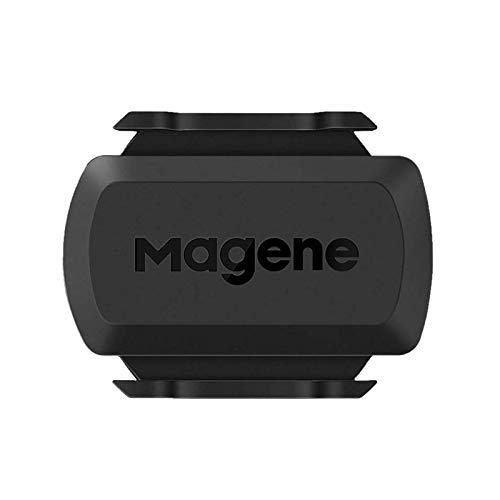
Magene Speed/Cadence Sensor Review Summary
The Magene Outdoor/Indoor Speed/Cadence Sensor makes the most sense for riders who want a single compact sensor platform that can serve either speed or cadence duties, with broad compatibility across bike computers, apps, and trainers.
It is a practical pick for indoor training, road cycling, and spinning-bike use when you want flexible connectivity rather than advanced analytics or a full featured ecosystem.
What stands out most is the way the product is positioned: one sensor can be used in speed mode or cadence mode, and the listing clearly states that you need two sensors if you want to track both at the same time.
That is not a flaw so much as a design constraint buyers need to understand before ordering.
For the right user, the upside is clarity.
You know exactly what the hardware is meant to do.
Review Scorecard
| Category | Score | Why it scores that way |
|---|---|---|
| Compatibility | 8/10 | Bluetooth and ANT+ support make it broadly usable with bike computers, apps, and trainers. |
| Setup clarity | 8/10 | The listing is explicit about mode switching and connection limits, which reduces confusion. |
| Versatility | 7/10 | Works for outdoor riding, indoor training, and spinning bikes, but one sensor does one job at a time. |
| Simplicity | 9/10 | Minimal design and a clear operating model make it easy to understand and deploy. |
| Power management | 7/10 | The sleep behavior helps conserve power, though riders must wake it after inactivity. |
| Value for fit | 8/10 | Strong for buyers who need a basic sensor with protocol flexibility rather than premium extras. |
Key Features and Specifications of Magene Speed/Cadence Sensor
The core hardware story is simple.
This is an outdoor/indoor speed and cadence sensor built for cycling use, and the brand positions it for road bikes, spinning bikes, and trainers.
The listing also points to compatibility with Onelap, Wahoo Fitness, and Zwift, which matters more than raw feature count for most buyers because the real question is whether the sensor will talk to your setup.
The biggest specification note is functional, not cosmetic.
The sensor can be used in only one mode at a time: speed or cadence.
If you want both metrics simultaneously, the listing says you need two sensors.
That makes the product more modular than all-in-one.
Riders who already own a bike computer or indoor app that understands separate sensors will see this as normal; buyers looking for a single device that does everything should not.
The connection rules are also important.
With Bluetooth, one sensor connects to one app or device at a time.
With ANT+, the listing says it can connect to multiple devices simultaneously.
That difference matters a lot for cyclists who like to record data on a head unit while also sending it to a training app or a second display.
Another useful detail is the sleep behavior.
The sensor enters a low-power state after about one minute of stillness, then resumes broadcasting when properly woken up.
That is a sensible power-saving feature for a cycling accessory, though it also means the user should not assume instant active transmission after long periods of inactivity.
| Detail | What the listing supports |
|---|---|
| Product type | Outdoor/indoor speed and cadence sensor |
| Use cases | Road bike, spinning bike, trainers |
| Connectivity | Bluetooth and ANT+ |
| Mode behavior | One sensor selects one mode at a time |
| Multi-device behavior | ANT+ can connect to multiple devices; Bluetooth is one-to-one |
| Sleep behavior | Enters sleep after about one minute stationary |
| Compatibility examples | Onelap, Wahoo Fitness, Zwift |
Pros and Cons of Magene Speed/Cadence Sensor
Pros
- Clear use case: the sensor is built for straightforward cycling speed or cadence tracking, not vague all-purpose marketing.
- Dual protocol support: Bluetooth and ANT+ improve compatibility across apps and hardware.
- Indoor and outdoor flexibility: the listing explicitly supports road bikes, spinning bikes, and trainers.
- Easy mental model: one sensor, one mode, one job. That simplicity helps buyers avoid setup mistakes.
- Power-conscious behavior: the sleep function is useful for preserving battery life during downtime.
Cons
- Not dual-metric from one sensor: you need two sensors if you want both speed and cadence at once.
- Bluetooth is limited to one connection: this can be restrictive for users who want to broadcast to multiple Bluetooth devices.
- Requires attention during setup: the listing notes mode switching and wake behavior, so it is not a true plug-and-forget accessory.
- Not an advanced training system: this is a sensor, not a broader performance platform with extra analytics or display features.
Who Should Buy Magene Speed/Cadence Sensor?
This sensor fits cyclists who want dependable basic data input for a bike computer, indoor training app, or trainer setup.
It is a good choice if you care more about compatibility and straightforward operation than about premium brand bundling or extra software features. Riders using Zwift, Wahoo Fitness, Onelap, or similar setups may appreciate the ANT+ and Bluetooth flexibility, especially if they already know whether they need speed data, cadence data, or both.
It also makes sense for riders who switch between indoor and outdoor riding.
Because the listing covers road bikes, spinning bikes, and trainers, the product is clearly meant to move with the bike rather than stay tied to one environment.
That helps if you want one sensor family that can serve more than one setup.
Who should skip it?
Buyers who expect one small device to measure speed and cadence simultaneously should look elsewhere or plan to buy a second unit.
Riders who need multi-device Bluetooth broadcasting should also be cautious, because the listing limits Bluetooth to one app or device at a time.
If you want a more integrated ecosystem, this may feel too basic.
Connectivity and Mode Behavior of Magene Speed/Cadence Sensor
Bluetooth vs ANT+ Use
Bluetooth and ANT+ are the headline strengths here, but they serve different needs.
Bluetooth is the easier path for many phone-based apps, while ANT+ is the better fit if you want one sensor to speak to multiple compatible devices at once.
That difference makes the Magene sensor more adaptable than a Bluetooth-only option, especially for cyclists who like redundancy in how their data is captured.
One Sensor, One Mode
The biggest planning detail is the mode limit.
The sensor can work as either speed or cadence, but not both simultaneously.
That is a useful design for cyclists who want to buy for a specific purpose, yet it means the product is not a shortcut around choosing the right configuration.
If your training plan depends on both metrics, the real setup is two sensors, not one.
Sleep and Wake Behavior
The one-minute sleep behavior is a practical battery-saving choice.
It reduces unnecessary broadcasting when the bike is stationary, which suits indoor and outdoor riding routines alike.
The tradeoff is minor but real: users must understand that inactivity can temporarily pause transmission, so the sensor should be properly woken before expecting data.
Best Fit by Riding Setup
For a trainer or spinning bike, the sensor’s simplicity is attractive because it can keep a clean setup without overcomplicating the cockpit.
For road bikes, its main strength is compatibility with common cycling apps and head units.
In both cases, the Magene sensor looks best as a reliable utility piece rather than a premium performance gadget.
Alternatives to Magene Speed/Cadence Sensor
If you want a similar cycling sensor with different ecosystem tradeoffs, look at the following Amazon search pages:
- Garmin speed and cadence sensors
- Wahoo RPM speed and cadence sensor
- CooSpo speed cadence sensor
- Favero cycling sensors
Garmin and Wahoo are the obvious alternatives if you want a more established cycling accessory brand.
CooSpo is worth comparing if you want a similar basic sensor concept with another low-friction option.
The key comparison point is not just price or brand recognition; it is whether you want single-mode simplicity, dual-protocol support, or a broader accessory ecosystem.
Is Magene Speed/Cadence Sensor Worth It?
Yes, if you want a compact speed or cadence sensor with clear operating limits and broad protocol support.
The Magene Outdoor/Indoor Speed/Cadence Sensor is worth it for riders who need a simple, compatible, no-nonsense data source for cycling apps, trainers, and bike computers.
It is less compelling if you expected one unit to handle both metrics at once or if you need Bluetooth broadcasting to multiple devices.
But within its stated limits, the product is sensible.
The listing is unusually explicit about mode switching, connection behavior, and sleep behavior, and that makes it easier to buy correctly.
For the right rider, that clarity is the value.