Choosing the right sleeping pad can make a big difference in how well you rest on the trail. The best ultralight sleeping pads balance low weight, compact storage, and enough insulation for the conditions you expect.
In this roundup, we focus on practical options for backpacking, camping, and thru-hiking, with a mix of foam and inflatable designs to suit different sleep styles and budgets.
Best 10 Ultralight Sleeping Pads Picks for 2026
Budget-friendly inflatable comfort
FUN PAC ultralight pad with built-in pillow

- Built-in foot pump inflates in 30-60 seconds.
- 3-inch inflatable design with integrated pillow.
- 1.5-pound packed weight suits backpacking and travel.
Best For: Campers who want quick setup and built-in pillow support.
Cold-weather insulated pick
Naturehike insulated pad with 4.6 R-value

- 4.6 R-value and reflective layers help reduce ground chill.
- Weighs 750g and packs down compactly.
- 3.2-inch thickness adds comfort and support.
Best For: Backpackers needing lightweight warmth for colder trips.
Simple foam reliability
Therm-a-Rest Z Lite Original foam pad
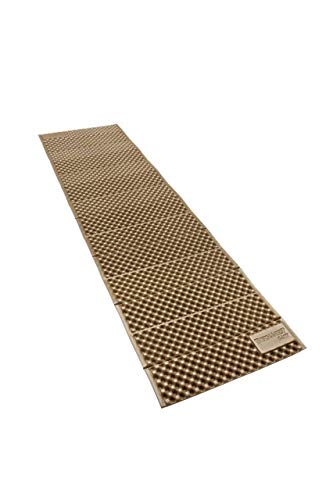
- Closed-cell foam design is durable and dependable.
- Weighs only 14 ounces.
- Accordion-fold shape makes packing simple.
Best For: Backpackers who want a rugged, no-fuss foam pad.
High-warmth all-season choice
TREKOLOGY UL R7 all-season sleeping pad

- 7.2 R-value supports cold-weather use.
- 4-inch thickness helps prevent bottoming out.
- Packs to water-bottle size with 900g weight.
Best For: All-season backpackers wanting warmth and support.
Classic Foam Pick
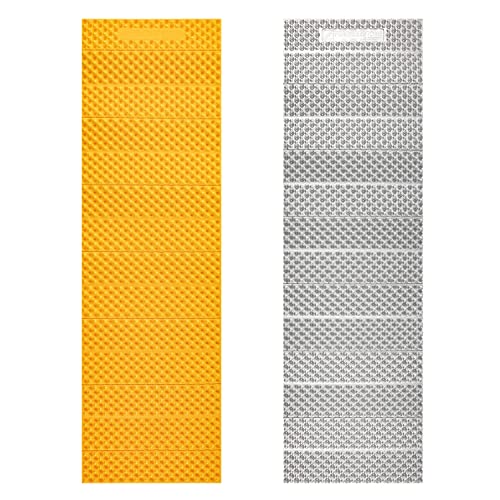
Foldable IXPE Foam Pad with Heat-Reflective Backing

- 396 g closed-cell foam construction
- Waterproof, moisture-proof, no inflation needed
- Aluminum film backing adds reflective warmth
Best For: Thru-hikers and minimalist campers who want a simple, dependable foam pad
Comfort Air Pick
Ultralight Inflatable Pad with Contoured Side Rails
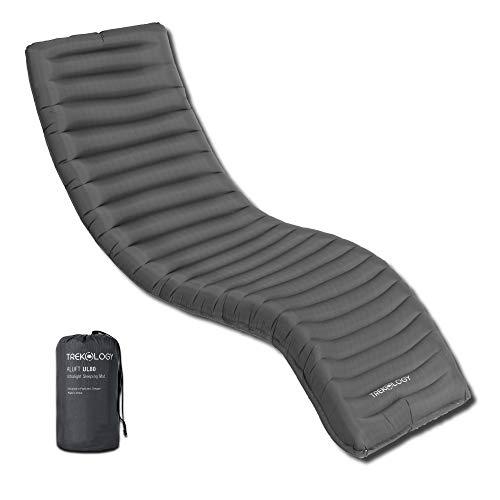
- 4-inch loft with contoured side rails
- 750 g packable inflatable design
- Water-resistant 40D nylon for 3-season trips
Best For: Backpackers and side sleepers who want more cushioning in a compact pad
Quick-Inflate Pick
Ultralight Pad with Built-In Foot Pump

- Inflates in under 60 seconds with foot pump
- 1.4 lb design packs down compactly
- Water-resistant TPU build for outdoor use
Best For: Campers who want a fast, no-extra-gear inflation setup
Foam Simplicity
Featherstone Insulated Foam Pad
- ASTM F3340-rated R-value 2.1 insulation
- Closed-cell foam won’t deflate on trail
- Weighs 455 g with simple carry setup
Best For: Minimalist backpackers who want a reliable no-pump foam pad
Inflatable Comfort

- 3.7-inch inflatable thickness with built-in pillow
- 30–60 second inflation with foot pump
- 50D nylon and TPU coating for rugged use
Best For: Sleepers who want more comfort and easier setup than a basic ultralight pad
High-Warmth Air Pad
Naturehike 6.5R Ultralight Pad

- High 6.5 R-value for cold-weather insulation
- 10 cm thick with sidewalls for stability
- 575 g PFAS-free 20D nylon and TPU build
Best For: Backpackers who need a warm, lightweight pad for colder nights
Budget-friendly inflatable comfort – FUN PAC ultralight pad with built-in pillow
If you want ultralight sleeping pads that still feel comfortable on rough ground, this FUN PAC model is built around convenience and cushioning. It combines a built-in foot pump, a 3-inch inflatable design, and an integrated pillow, making it a practical pick for campers who want fast setup and less gear to carry.
Best For: Campers and backpackers who want a compact, easy-to-inflate pad with built-in pillow support.
Pros:
- Built-in foot pump inflates the pad in about 30-60 seconds.
- At 1.5 pounds, it is easy to pack for hiking, camping, and travel.
- 3-inch thickness and egg-shaped air cells help lift you off uneven ground.
- Connectable side buttons let you link two pads for a wider sleeping setup.
Cons:
- Single-size pad may feel narrow for sleepers who want extra room.
- Best suited to moderate comfort needs rather than premium insulation.
- Requires inflation before use, unlike simple foam pads.
Overall, this is a strong value-oriented choice for anyone who wants an ultralight sleeping pad with quick inflation and a more complete sleep setup. The built-in pillow and compact packed size make it especially appealing for straightforward overnight trips.
Cold-weather insulated pick – Naturehike insulated pad with 4.6 R-value
For ultralight sleeping pads that prioritize warmth, this Naturehike model stands out with its 4.6 R-value and reflective insulation structure. It is designed to reduce heat loss to the ground, making it a more serious option for cooler trips where warmth matters as much as weight.
Best For: Backpackers and campers who need a lightweight pad with strong insulation for cold conditions.
Pros:
- 4.6 R-value offers solid insulation for temperatures above -4°F/-20°C.
- 8-layer aluminum molded structure is designed to reduce heat loss and noise.
- Weighs 750g/1.65lb and packs to a compact size for easy carrying.
- 3.2-inch thickness provides resilience, shock absorption, and support.
Cons:
- Narrower width at 58 cm may not suit sleepers who like extra space.
- Best performance depends on careful inflation, especially with temperature changes.
- Less ideal for users who only need a simple warm-weather pad.
This is a well-rounded insulated option if you want an ultralight sleeping pad that can handle colder nights without a big weight penalty. Its combination of warmth, compact storage, and durable materials makes it a smart pick for colder backpacking trips.
Simple foam reliability – Therm-a-Rest Z Lite Original foam pad
If you prefer ultralight sleeping pads with no valves, no inflation, and no fuss, the Therm-a-Rest Z Lite Original is a classic closed-cell foam option. It trades plush cushioning for dependable durability, easy packing, and consistent performance on the trail.
Best For: Backpackers and mountaineers who want a rugged, economical foam pad they can trust anywhere.
Pros:
- Closed-cell foam construction is durable, dependable, and simple to use.
- Weighs just 14 ounces, making it very light for backpacking.
- Accordion-fold design packs quickly and is easy to carry.
- Dimples in the foam help trap heat for added warmth.
Cons:
- Less cushioned than thicker inflatable sleeping pads.
- R-value of 1.7 is modest for colder conditions.
- Bulkier than some inflatable options when folded.
This pad is a strong choice when reliability matters more than softness. For hikers who want a no-maintenance ultralight sleeping pad, the Z Lite Original remains one of the most practical options.
High-warmth all-season choice – TREKOLOGY UL R7 all-season sleeping pad
Among ultralight sleeping pads, this TREKOLOGY model is aimed squarely at year-round use with a strong 7.2 R-value and 4-inch thickness. It is built for hikers who want a compact inflatable pad that balances warmth, support, and durability without adding too much trail weight.
Best For: All-season backpackers who want high insulation and a roomy inflatable pad.
Pros:
- 7.2 R-value provides strong insulation for all-season comfort.
- 4-inch thickness helps prevent bottoming out and improves support.
- Weighs 900g and packs down to about the size of a water bottle.
- 40D ripstop nylon with TPU coating adds durability and water resistance.
Cons:
- No built-in pump; inflation requires mouth or a separate pump bag.
- Best suited to sleepers up to 5’11” according to the product notes.
- Heavier than the lightest foam-only backpacking pads.
This is a strong ultralight sleeping pad if your priority is staying warm across changing seasons. The high R-value and thick support make it especially appealing for backpackers who want comfort without giving up packability.
Classic Foam Pick – Foldable IXPE Foam Pad with Heat-Reflective Backing
If you want ultralight sleeping pads that favor simplicity, durability, and insulation, this foldable closed-cell foam option is a smart pick. It uses IXPE foam with an aluminum film backing to reflect heat, and the waterproof build makes it a low-fuss choice for trail use, camping, or backup sleeping comfort.
Best For: Thru-hikers, minimalist backpackers, and campers who want a reliable foam pad that does not need inflation.
Pros:
- Weighs about 396 grams, keeping pack weight very low.
- Foldable closed-cell foam design is waterproof and moisture-proof.
- Aluminum film backing helps capture and circulate body heat.
- Open size of 72.8 x 23.6 inches gives a full-length sleeping surface.
Cons:
- At 0.7 inches thick, it is much thinner than inflatable pads.
- Insulation rating of 2.1 is modest for colder conditions.
- Bulkier in folded form than some air pads when packing tight.
This is a practical choice if you value dependability over cushion. For ultralight sleeping pads, it stands out as a rugged, no-inflation option with decent warmth for fair-weather adventures.
Comfort Air Pick – Ultralight Inflatable Pad with Contoured Side Rails
Among ultralight sleeping pads, this inflatable model aims to balance comfort and packability. The contoured sides and S-curve channels are designed to keep you centered, while the 4-inch loft gives a more cushioned feel than typical thin foam pads.
Best For: Backpackers and tent campers who want a compact air pad with better comfort and side-sleeper support.
Pros:
- 4-inch thickness provides substantial lift off the ground.
- Raised contoured sides and channels help keep you centered.
- Weighs only 750 g and packs down small for backpacking.
- 40D nylon build is water-resistant and suited to 3-season use.
Cons:
- Estimated R-value of 1.6-2 is not meant for winter or sub-freezing trips.
- Inflation is by mouth, so setup takes some effort without a pump.
- Heavier than the lightest foam options in this roundup.
If comfort matters as much as weight, this is a strong middle ground. It is best viewed as a warm-weather, portable sleep solution for hikers who want more cushioning than a basic foam mat.
Quick-Inflate Pick – Ultralight Pad with Built-In Foot Pump
If you want ultralight sleeping pads with fast setup, this inflatable option stands out for its built-in foot pump. It is water resistant, packs down small, and offers a practical mix of portability and convenience for hiking or backpacking.
Best For: Campers and backpackers who want a quick-inflating pad with no separate pump to carry.
Pros:
- Built-in foot pump inflates the pad in under 60 seconds.
- Weighs only 1.4 pounds, which is still lightweight for travel.
- Packs to 12 x 4 x 4 inches for easier storage in a pack.
- Water-resistant TPU construction adds weather protection.
Cons:
- At 2 inches thick, it is less cushioned than thicker pads.
- Maximum capacity is listed at 220 pounds.
- Bulk and weight are higher than the lightest foam sleep mats.
This is a good pick if fast setup matters more than shaving every ounce. For ultralight sleeping pads, it offers a convenient balance of comfort, portability, and quick inflation.
Foam Simplicity – Featherstone Insulated Foam Pad
If you want ultralight sleeping pads without dealing with valves, pumps, or overnight leaks, this Featherstone foam mat is a straightforward backcountry option. Its closed-cell IXPE foam, dual-density heat-reflective film, and ASTM F3340 insulation rating make it a practical choice for hikers who value reliability over plushness.
Best For: Ultralight backpackers and thru-hikers who want a dependable foam pad that won’t deflate.
Pros:
- ASTM F3340-rated insulation with an R-value of 2.1.
- Closed-cell foam construction avoids punctures and air leaks.
- Hexagonal nodes add more coverage than traditional egg-crate foam.
- Lightweight 455 g build with a simple elastic band included.
Cons:
- Less cushioned than thick inflatable pads.
- Not water resistant.
Overall, this is a low-fuss pick for minimalist trips where durability and weight matter more than luxury comfort. It stands out if you want a pad you can trust season after season.
Inflatable Comfort – Myxslop 50D Camping Pad
Among ultralight sleeping pads, this Myxslop model focuses on comfort first, with a 3.7-inch thick inflatable design, integrated pillow, and honeycomb air chambers that aim to keep side and back sleepers supported. It also packs a built-in foot pump and dual-valve system, making setup and pack-down easier on short backpacking trips or car-camping-style overnights.
Best For: Campers who want a thicker, mattress-like pad with quick inflation and built-in pillow support.
Pros:
- 3.7-inch thickness helps keep you off uneven ground.
- Built-in foot pump inflates in about 30–60 seconds.
- 50D nylon with TPU coating adds tear and moisture resistance.
- Side-snap fasteners let you connect two pads for a double-bed setup.
Cons:
- At 1.5 lbs, it is heavier than the lightest minimalist pads.
- Bulky compared with simple foam options.
This is a strong comfort-forward choice if you still want a packable pad for travel. The tradeoff is added weight, but the thickness and built-in features make it easy to live with at camp.
High-Warmth Air Pad – Naturehike 6.5R Ultralight Pad
If warmth is the priority in your ultralight sleeping pads search, this Naturehike air pad is built around a high 6.5 R-value and layered aluminum insulation. The 10 cm thickness, sidewalls, and low reported weight make it a strong fit for colder trips where you still want a compact pad that disappears in the pack.
Best For: Cold-weather backpackers who need high insulation without carrying a heavy pad.
Pros:
- High 6.5 R-value for serious insulation.
- 10 cm thickness and sidewalls help with comfort and stability.
- 20D nylon plus TPU construction is PFAS-free and lightweight.
- Weighs 575 g and packs small for hiking or backpacking.
Cons:
- More complex construction may be overkill for warm-weather use.
- Must be inflated carefully to avoid over-inflation issues.
For colder conditions, this is the most insulation-heavy option in the group and the one most clearly aimed at warmth-to-weight balance. It is a practical pick if you want a compact pad that can handle chillier nights.
How We Picked the Best Ultralight Sleeping Pads
We looked for models that make sense for real-world backpacking: low packed weight, small packed size, reliable materials, and comfort that matches the intended use. We also considered R-value, thickness, inflation style, and whether a pad is better suited to warm-weather trips, shoulder-season camping, or all-season use.
Quick Comparison
Ultralight Sleeping Pads generally fall into two camps: closed-cell foam and inflatable. Foam pads are simple, durable, and fast to deploy, but usually less cushioned. Inflatable pads offer better comfort and pack smaller, though they depend on valves, seams, and puncture resistance. For some buyers, the best choice is the lightest, toughest option; for others, it is the most comfortable pad that still fits in a backpack.
Key Buying Factors for Ultralight Sleeping Pads
Weight and Packed Size
If you count every ounce, focus on total weight and how easily the pad fits inside your pack. A lighter pad can improve long-day comfort, but only if it still meets your sleep and insulation needs.
Insulation and R-Value
R-value is one of the most important specs for Ultralight Sleeping Pads. Lower values are fine for summer use, while higher values are better for cold ground, shoulder seasons, and winter trips. Match the rating to your expected temperatures, not just your preferred weight.
Comfort and Thickness
Side sleepers and travelers who want more cushioning should pay attention to thickness, shape, and features like sidewalls or a built-in pillow. Foam pads are simpler, but inflatable pads usually provide more pressure relief.
Durability and Setup
Closed-cell foam pads are nearly worry-free and can be used as sit pads or backup insulation. Inflatable pads often feel more comfortable, but they are better choices when you are willing to trade a little durability for added comfort and a smaller packed size.
Who Should Buy Which Ultralight Sleeping Pads?
Choose a foam model if you want maximum reliability, fast setup, and a no-fuss pad for rough use. Choose an insulated inflatable pad if you want a better night’s sleep and can carry a little more care for inflation and puncture prevention. If you camp in colder conditions, prioritize higher R-values; if you mostly backpack in summer, a lighter, less insulated design may be the smarter call. For most buyers, the right Ultralight Sleeping Pads are the ones that match their sleep style, climate, and pack-weight goals without overpaying for features they will not use.