Choosing the right optic for the trail means balancing image quality, weight, and setup speed. The best spotting scopes for hiking should be easy to carry, simple to steady, and sharp enough to help you spot wildlife or distant terrain fast.
Below, we focus on models that make sense for backcountry use, from compact options to larger scopes that still offer strong value for hikers who want more reach.
Best 10 Spotting Scopes for Hiking Picks for 2026
Trail-Ready All-Rounder

- 20-60x zoom for wide-to-detailed viewing
- 80mm multi-coated lens with BAK4 prism
- Waterproof body plus smartphone adapter
Best For: Hikers who want a versatile, accessory-rich scope
Premium Low-Light Pick
Vortex Diamondback HD 20-60x85

- HD optics for sharp, color-true viewing
- Helical focus and 85mm objective
- Argon purged, waterproof, and fogproof
Best For: Hikers and hunters who prioritize top-tier optics
Lightweight Budget Trekker
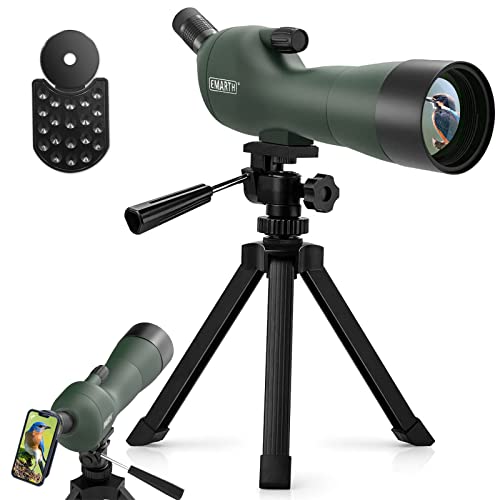
- Just 1.31 lbs for easy hiking carry
- Includes 14-inch tripod and shoulder-strap case
- Waterproof and fogproof with 20-60x zoom
Best For: Hikers who want a light, affordable carry-friendly scope
Brightest Field View
Bushnell Trophy Xtreme Spotter

- Best-in-class brightness for low light
- Fully multi-coated and waterproof
- Tripod and window-mount compatible
Best For: Hikers who want a bright, rugged, easy-mount scope
Beginner-Friendly Pick
SVBONY SV28 Angled 25-75x70 Spotting Scope
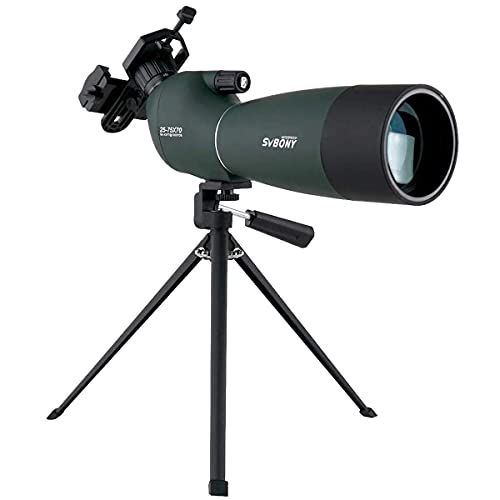
- 25-75x zoom for flexible viewing
- 70mm lens gathers more light
- Includes phone adapter and tripod
Best For: Hikers and campers who want an easy-to-carry starter scope
Compact All-Weather Pick
Bushnell Prime 16-48x50 Spotting Scope

- Compact, lightweight body for packing
- IPX7 waterproof and fog-proof
- Fully multi-coated lenses improve clarity
Best For: Trail users who want a compact, weather-resistant scope
High-Power Viewing Pick
Athlon Talos 20-60x80 Angled Spotting Scope
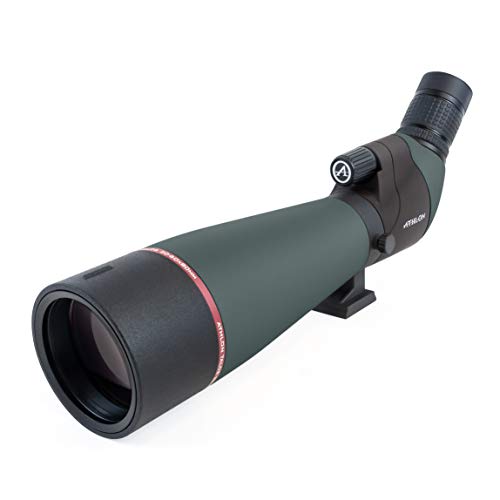
- 20-60x zoom for distant viewing
- 80mm lens gathers ample light
- Waterproof, fog-proof, nitrogen-purged
Best For: Hikers needing stronger reach and weather protection
Trail-Ready HD Spotting Scope

- 20-60x zoom for flexible hiking views
- BAK4 glass with full broadband multi-coating
- Includes tripod, case, and phone adapter
Best For: Hikers who want a versatile scope for scenic viewing and wildlife spotting
Long-Range Hiking Spotter

- 25-75x zoom for extra reach on the trail
- Full-size adjustable tripod included
- Fully multi-coated 80mm lens with BAK4 prism
Best For: Hikers who stop and observe often and want higher magnification
Balanced Trail Spotting Scope

- 20-60x zoom for flexible trail viewing
- BAK4 Porro prism with multi-coated optics
- Includes tabletop tripod and phone holder
Best For: Hikers who want a straightforward scope for wildlife and scenery
Trail-Ready All-Rounder – Gosky 20-60×80 Spotter
If you want spotting scopes for hiking that can handle scenic pullouts, wildlife checks, and occasional stargazing, this Gosky model offers a lot of reach for the price. Its 20-60x zoom, 80mm objective, and included phone adapter make it a practical pick when you want to see farther without carrying a full-size setup.
Best For: Hikers who want a versatile, budget-friendly scope with strong magnification and phone-capture features.
Pros:
- 20-60x variable zoom gives you both wide searching and detailed viewing.
- 80mm fully multi-coated lens and BAK4 prism are built for brighter, clearer images.
- Nitrogen-filled, waterproof, and fog-proof construction suits changing trail weather.
- Includes a smartphone adapter plus tabletop tripod and carrying accessories.
Cons:
- At 2.4 pounds, it is not the lightest option for long hikes.
- The included tripod is a tabletop style, so you may want a taller support for some situations.
Overall, this is a capable hiking companion if you value flexibility and accessories over ultra-minimal weight. It is especially appealing for travelers who want one scope that can cover birds, views, and distant details on the trail.
Premium Low-Light Pick – Vortex Diamondback HD 20-60×85
Among spotting scopes for hiking, the Vortex Diamondback HD stands out when you care most about image quality and low-light performance. Its HD optical system, 85mm objective, and helical focus wheel are aimed at delivering sharp views with quick adjustments on the move or at a scenic overlook.
Best For: Hikers and western hunters who want premium optics, dependable weather protection, and lifetime warranty support.
Pros:
- HD optical system improves resolution, color fidelity, and edge-to-edge sharpness.
- Heavily coated optics and 85mm objective help with brightness and light transmission.
- Built-in helical focus wheel allows fast, fine adjustments.
- Argon purging, O-ring sealing, and Armortek coatings add weather and lens protection.
Cons:
- At 3.8 pounds, it is heavier than more travel-focused options.
- The larger body may be more than casual hikers need for short outings.
This is the most refined option in the group if image quality matters more than pack weight. For hikers who spend time glassing distant ridges or want a scope they can trust in rough weather, it is a strong premium choice.
Lightweight Budget Trekker – 20-60×60 Angled Spotter
If you want spotting scopes for hiking without adding much pack weight, this angled 20-60×60 kit is built around portability. At just 1.31 pounds and paired with a soft shoulder-strap case and compact tripod, it is an easy carry for trail days, camping stops, and scenic breaks.
Best For: Hikers who want a lightweight, travel-friendly spotting scope with a compact included tripod.
Pros:
- Very light at 1.31 pounds, making it easy to pack for long days outdoors.
- Includes a 14-inch tabletop tripod with wider legs for better stability on uneven ground.
- 20-60x zoom and easy focusing cover both wide searches and closer inspection.
- Waterproof, fogproof, and non-slip design helps in rough outdoor conditions.
Cons:
- The compact tripod is useful, but not as tall or versatile as a full-size support.
- 60mm objective is smaller than larger spotting scopes, so brightness may be more limited.
This is a smart choice if your main concern is keeping gear light and simple. It gives hikers a practical balance of reach, portability, and included accessories without feeling bulky in the pack.
Brightest Field View – Bushnell Trophy Xtreme Spotter
For hikers who want simple, durable spotting scopes for hiking with a focus on brightness, the Bushnell Trophy Xtreme is a straightforward option. It uses a fully multi-coated optical system, waterproof construction, and a tripod/window-mount setup to make distant viewing practical at campsites, overlooks, and roadside stops.
Best For: Outdoors users who want a bright, waterproof spotting scope with easy tripod or window-mount use.
Pros:
- Best-in-class brightness is the headline feature for low-light viewing.
- Fully multi-coated optics support better light transmission.
- Waterproof construction adds confidence in changing outdoor conditions.
- Compatible with tripod mounting and a window mount for flexible use.
Cons:
- The listed zoom ratio is 12x in the supplied details, which is less versatile than 20-60x models.
- It does not include the extra smartphone-capture features found on some competitors.
This Bushnell makes sense when brightness and rugged simplicity matter more than high zoom range. It is a solid pick for hikers who want dependable viewing at the trailhead, campsite, or overlook.
Beginner-Friendly Pick – SVBONY SV28 Angled 25-75×70 Spotting Scope
If you want spotting scopes for hiking that are easy to carry and simple to use, the SVBONY SV28 is built around portability and straightforward setup. Its 25-75x zoom, 70mm objective lens, and included tripod make it a practical choice for casual wildlife viewing, scenery, or campsite observation when you want more reach than binoculars without a complicated setup.
Best For: Hikers, campers, and beginners who want a lightweight scope with zoom flexibility and a phone adapter.
Pros:
- 25-75x zoom gives flexible magnification for different viewing distances
- 70mm objective lens helps gather plenty of light for a brighter image
- Includes a phone adapter and portable desktop tripod for easy use and sharing
- Lightweight, portable design is suitable for carrying on outings and camping trips
Cons:
- Desktop tripod is better suited to stable viewing than rugged trail use
- Large zoom range may be more than some casual users need
- Best described for beginner to novice use rather than premium optics performance
Overall, the SV28 is a value-focused option for hikers who want an affordable, travel-friendly spotting scope with useful extras. It balances size, weather resistance, and simple operation well for outdoor trips where convenience matters.
Compact All-Weather Pick – Bushnell Prime 16-48×50 Spotting Scope
For hikers who prioritize compact gear, this Bushnell Prime fits well among spotting scopes for hiking thanks to its lightweight, compact build and weather-ready construction. The 16-48×50 design, fully multi-coated lenses, and low-dispersion glass are aimed at bright, clear viewing in a smaller package that is easier to pack for the trail.
Best For: Hikers who want a compact, waterproof scope with solid optics and easy portability.
Pros:
- Lightweight and compact design is easier to pack and carry
- IPX7 waterproof and fog-proof construction supports all-weather use
- Fully multi-coated lenses help improve brightness and clarity
- Low dispersion glass is designed to enhance color and contrast in low light
Cons:
- 50mm objective lens is smaller than larger light-gathering scopes
- Maximum 48x zoom is lower than some long-range alternatives
- Tabletop tripod may be less versatile on uneven ground
This is a strong choice if you want a hiking scope that stays manageable in your pack without giving up all-weather protection. It leans toward practical portability and dependable optics rather than maximum magnification.
High-Power Viewing Pick – Athlon Talos 20-60×80 Angled Spotting Scope
If your hiking trips include long-distance wildlife watching or open-country views, this Athlon Talos stands out among spotting scopes for hiking for its larger 80mm objective lens and 20-60x zoom. It is built for brighter image performance, weather protection, and more comfortable angled viewing on a tripod.
Best For: Hikers who want a larger, higher-magnification scope for distant viewing and harsh weather.
Pros:
- 20-60x magnification is useful for dialing in distant targets
- 80mm objective lens supports strong light gathering
- Fully multi-coated lenses and K9 glass prisms are designed for bright images
- Nitrogen purging and waterproofing add protection in rough weather
Cons:
- 2.4-pound weight is heavier than compact hiking-friendly scopes
- Full-size design may take up more space in a pack
- Best used with a tripod, so it is less grab-and-go than smaller models
The Talos is the most powerful option here, but that extra reach comes with a larger, heavier body. It makes the most sense for hikers who are willing to carry more scope in exchange for better long-range viewing.
Trail-Ready HD Spotting Scope – 20-60×80 Dual Focus
If you want spotting scopes for hiking that balance reach with easier handling, this 20-60×80 model is built for practical trail use. The 45° angled design helps reduce neck strain, while the dual focusing system makes it easier to lock onto distant terrain, lakes, or wildlife from a mountain overlook.
Best For: Hikers who want a versatile scope for scenic viewing, wildlife spotting, and occasional digiscoping on the trail.
Pros:
- 20-60x zoom gives flexibility for both wide scanning and tighter detail.
- BAK4 glass and full broadband multi-coating are designed for brighter, clearer views.
- Nitrogen purging and rubber armor help with waterproof, fogproof, and impact-resistant use.
- Includes a tripod, carrying case, and phone adapter for easier setup.
Cons:
- At 80mm, it is not the most compact option for long hikes.
- The tripod-based setup is better for planned stops than fast moving observation.
This is a strong fit if your hikes include overlooks, birding stops, or relaxed observation sessions where image brightness and comfort matter more than ultralight packing.
Long-Range Hiking Spotter – 25-75×80 Full Tripod
Among spotting scopes for hiking, this 25-75×80 model is aimed at users who want extra magnification and a full-size tripod for steadier viewing at stops. The angled eyepiece, waterproof build, and included phone adapter make it a practical option when your trail plan includes birding, camping, or distant landscape viewing.
Best For: Hikers who stop and observe often and want higher magnification with a full tripod setup.
Pros:
- 25-75x magnification offers more reach than many basic spotters.
- Fully multi-coated 80mm lens and BAK4 roof prism are designed for bright, clear images.
- Full-size tripod adjusts from 18.3″ to 59.3″ for different viewing positions.
- Includes carrying bag, phone adapter, and lens covers for easier transport and use.
Cons:
- The larger tripod and 80mm body may be less convenient for minimalist hikers.
- Higher magnification can be harder to steady without careful setup.
If your hiking routine includes longer breaks for spotting wildlife or checking distant terrain, this model gives you more flexibility and a more stable viewing platform than compact trail scopes.
Balanced Trail Spotting Scope – 20-60×80 Phone Holder
This 20-60×80 spotting scope for hiking focuses on the essentials: usable magnification, waterproof protection, and a tripod-based setup for stable viewing at scenic stops. Its 80mm fully multi-coated objective lens and BAK4 Porro prism are intended to improve brightness and clarity when you are scanning ridgelines, wildlife, or distant campsites.
Best For: Hikers who want a straightforward scope for wildlife, scenery, and occasional smartphone digiscoping.
Pros:
- 20-60x magnification covers both general viewing and closer detail.
- BAK4 Porro prism and multi-coated optics are designed for brighter images.
- Includes a tabletop metal tripod and 360-degree rotation for easier positioning.
- Comes with a phone holder, carrying bag, and protective caps for travel.
Cons:
- The tabletop tripod is less versatile than a full-height field tripod.
- Best suited to stop-and-observe use rather than quick, on-the-move viewing.
This is a sensible middle-ground choice if you want a feature set that covers hiking, camping, and wildlife viewing without moving up to a larger tripod system.
How We Picked the Best Spotting Scopes for Hiking
We looked for Spotting Scopes for Hiking that offer a practical mix of portability, magnification range, objective lens size, and weather resistance. We also considered whether a scope is likely to be easy to pack, quick to deploy, and stable enough for real-world use on uneven ground.
Because hiking gear has to earn its space, we favored models with useful accessories, durable construction, and features that matter outdoors rather than specs that only look good on paper.
Quick Comparison
For most hikers, the sweet spot is a scope that is light enough to carry all day without sacrificing too much brightness. Smaller objectives are easier to pack, while larger 80mm-class scopes usually deliver better low-light performance but add bulk and weight. Angled bodies can be more comfortable for shared use and longer glassing sessions, while straight bodies are often quicker for fast target acquisition.
Key Buying Factors for Spotting Scopes for Hiking
Weight and Packability
Start with how the scope will fit into your pack and how often you expect to carry it. If you hike long distances, compact and mid-size options are usually more practical than full-size models.
Magnification and Lens Size
Higher magnification is useful only if the image stays steady and bright. A 20-60x range is a common all-around choice, while 16-48x models may be easier to hold steady in windy conditions. Larger objective lenses gather more light, but they also increase size.
Image Stability and Tripod Use
For trail use, tripod compatibility matters just as much as optical power. A scope that performs well on a solid tripod will be far more useful than a stronger model that shakes too much in the field.
Weather Resistance and Durability
Look for waterproof and fog-resistant construction if you expect variable mountain weather. Rubber armor, sealed bodies, and reliable build quality can make a big difference on rocky trails and in damp conditions.
Who Should Buy Which Spotting Scopes for Hiking?
If you want the most trail-friendly option, choose a lighter mid-size scope with moderate magnification and a simple setup. If you often watch wildlife from overlooks or want more detail at distance, a larger 80mm model may be worth the extra carry weight. Budget-minded buyers can focus on value packs, while serious backcountry users should prioritize durability, optical consistency, and a tripod system that is easy to trust on uneven terrain.
In short, the best choice depends on how far you hike, how much you value compact gear, and how much reach you need once you stop and glass the view.