If you want dependable backup power that can recharge from the sun, portable power stations with solar input are one of the most practical options available. They can keep essentials running during outages and make off-grid travel far easier.
In this roundup, we focus on models that balance battery capacity, output, expandability, and real-world portability so you can choose the right setup for your home, RV, or outdoor use.
Best 10 Portable Power Stations with Solar Input Picks for 2026
Whole-Home Solar Backup
EcoFlow DELTA Pro with 2x400W Panels

- 3,600W output with 15 outlets
- Includes 2x400W solar panels
- EcoFlow app control and IP68 panels
Best For: Serious home backup and RV users who want a large solar-ready power station
Fast-Recharge Home Backup
Jackery HomePower 3000 with 2x200W Panels

- 3,072Wh capacity with 3,600W output
- UPS switches within 20ms
- Solar recharge to 80% in 9 hours
Best For: Households wanting reliable outage backup with solar charging and fast UPS response
Expandable Off-Grid Backup
AFERIY 3840Wh Expandable Solar Generator

- Starts at 3,840Wh and expands to 11.5kWh
- UPS under 10ms for critical loads
- App control with 15 output ports
Best For: Users who need expandable solar backup for home essentials and off-grid use
Portable High-Capacity Backup
Jackery HomePower 3600 Plus with 2x200W Panels

- 3,600W output with 7,200W parallel support
- 3584Wh capacity expands to 21kWh
- Wheels, handle, and 4-hour solar recharge
Best For: Users wanting a rollable, high-output solar generator for home backup
Heavy-Duty Home Backup Pick
AFERIY P210 2048Wh LiFePO4 Power Station

- 2048Wh LiFePO4 battery with 3500+ cycle life
- 2400W output with 4800W surge
- Sub-10ms UPS and 16 total ports
Best For: Home backup, camping, and sensitive electronics
Expandable Whole-Home Option
GROWATT HELIOS 3600 3600Wh Solar Generator
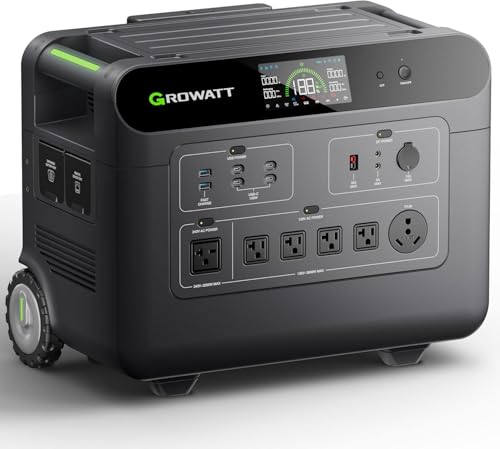
- 3600Wh LFP battery with 3600W output
- Expandable up to 36kWh
- 2000W solar charging with fast recharge
Best For: Expandable backup power, RVs, and off-grid setups
Fast-Charging Compact Pick
UDPOWER S2400 2083Wh Solar Generator

- 2083Wh LiFePO4 battery with 4000+ cycles
- 2400W output with 3000W peak
- Up to 440W solar charging and 1.3-hour AC recharge
Best For: Portable backup, RV trips, and camping
Expansion Battery Pick
GROWATT INFINITY 2000 Pro 2048Wh

- 2048Wh LFP capacity expands up to 6144Wh
- 2400W output with 13 outlets and RV-ready ports
- 15ms EPS and cold-start support for backup use
Best For: Owners of the compatible 2000 Pro system who need expandable solar-ready backup power
High-Power Fast-Charge Pick

- 2048Wh LFP battery expands to 10.24kWh
- 1800W AC + 1200W PV input for rapid charging
- 2800W pure sine wave output with dual PV support
Best For: Home backup, RV users, and buyers who prioritize fast charging and high output
Compact Camping Pick

- 444Wh capacity in a lightweight 9.9 lb body
- 500W pure sine wave output with 1000W surge
- Solar, AC, and car charging with MPPT control
Best For: Light camping, travel, and basic emergency backup for small electronics
Whole-Home Solar Backup – EcoFlow DELTA Pro with 2x400W Panels
If you want portable power stations with solar input that can handle serious household loads, the EcoFlow DELTA Pro is built for big jobs. With 3,600W output, 15 outlets, and included 400W panels, it is a practical pick for home backup, camping, and RV use when you need fast solar recharge and broad device support.
Best For: Home backup buyers who want a high-capacity solar generator with fast recharge potential and lots of ports.
Pros:
- 3,600W output with 15 total outlets for varied appliances and devices
- Included 400W panels support solar charging with up to 22.4% conversion efficiency
- Foldable panels are IP68 rated and designed for easier transport
- EcoFlow app control lets you monitor and adjust charging settings remotely
Cons:
- Power station and solar panels are delivered separately
- At 99 pounds, the full system is not especially lightweight
This is a strong fit if you value capacity, flexibility, and app-based control over ultra-portability. It makes more sense for serious backup planning than for casual weekend charging.
Fast-Recharge Home Backup – Jackery HomePower 3000 with 2x200W Panels
Among portable power stations with solar input, the Jackery HomePower 3000 stands out for dependable home backup and quick recovery. Its 3,072Wh capacity, 3,600W output, and included 200W solar panels make it a practical choice for keeping essentials running through outages while still offering flexible charging options.
Best For: Homeowners who want a fast-charging backup unit for essentials, with solar support for longer outages.
Pros:
- 3,600W AC output and 3,072Wh capacity for fridge, router, lights, and more
- Charges to 80% in 9 hours with 2x200W solar panels
- UL-certified UPS switches within 20ms for sensitive devices
- Multiple AC, USB-C, USB-A, DC, and TT-30 RV connections
Cons:
- Solar charging is useful, but not the fastest option compared with AC+DC hybrid recharge
- It is still a substantial unit at 59.5 pounds
If you want a balanced backup solution with strong app-less simplicity and flexible charging, this is an easy model to consider. It is especially appealing for outage preparedness and RV-ready power in one package.
Expandable Off-Grid Backup – AFERIY 3840Wh Expandable Solar Generator
If you are comparing portable power stations with solar input for longer-term backup, the AFERIY 3840Wh model is built to scale. It starts with a 3.8kWh LiFePO4 battery and 3,600W continuous output, then expands to 11.5kWh with add-on battery packs, giving it a lot of flexibility for home, camping, or mobile work use.
Best For: Buyers who want expandable capacity, app control, and strong UPS backup for essential devices.
Pros:
- 3,840Wh starting capacity expands up to 11.5kWh
- Four recharge methods, including solar and AC+solar
-
UPS <10ms supports seamless switching for critical devices
- App control plus 15 output ports for broad device coverage
Cons:
- At 104.7 pounds, it is heavy for frequent moving
- Expanded system requires extra battery packs, which adds complexity
This is a capable pick if your priority is runtime growth rather than minimum weight. It is especially compelling for users who want a solar generator that can start large and get even larger later.
Portable High-Capacity Backup – Jackery HomePower 3600 Plus with 2x200W Panels
For buyers focused on portable power stations with solar input and serious home backup capability, the Jackery HomePower 3600 Plus is aimed at high-demand appliances. It delivers 3,600W output, supports 120V and 240V in parallel, and can recharge from solar in about 4 hours, making it a flexible option for outage preparation and everyday mobility.
Best For: Home backup users who need high output, expandable storage, and easy roll-around portability.
Pros:
- 3,600W output with 7,200W parallel support for heavier appliances
- 3584Wh capacity expands up to 21kWh per unit
- Solar recharge in about 4 hours, with four charging methods total
- Wheels and telescopic handle make it easier to move than most large units
Cons:
- Solar panels are included in the bundle, but the setup is still a large system
- Best suited to home backup; it is less of a grab-and-go portable option
This model makes sense if you want a large solar-ready power station that is still easier to roll around than lift. Its expandable capacity and dual-voltage support give it a clear edge for serious household backup planning.
Heavy-Duty Home Backup Pick – AFERIY P210 2048Wh LiFePO4 Power Station
If you want portable power stations with solar input that can also handle serious household backup, the AFERIY P210 is built for that middle ground. Its 2048Wh LiFePO4 battery, 2400W inverter, and sub-10ms UPS response make it a practical choice for camping, CPAP use, and emergency home power.
Best For: Users who want a quiet, high-capacity power station for home backup, camping, and sensitive electronics.
Pros:
- 2048Wh LiFePO4 battery is rated for 3500+ cycles and long-term use.
- 2400W output with 4800W peak supports a wide range of appliances.
- Sub-10ms UPS switching helps keep critical devices running through outages.
- 16 ports, including USB-C, AC, DC, car, and XT60, support multiple devices at once.
Cons:
- At 48.5 lbs, it is not the lightest option to move around.
- Solar charging is supported via included cable, but panel output depends on your setup.
This is a strong fit if you want a quiet, app-managed unit with solid port selection and long battery life. It stands out most as a dependable backup-first model rather than a bare-bones portable charger.
Expandable Whole-Home Option – GROWATT HELIOS 3600 3600Wh Solar Generator
For buyers comparing portable power stations with solar input, the GROWATT HELIOS 3600 is the most expandable of the group. It combines a 3600Wh LFP battery, 3600W output, and fast solar charging with features aimed at backup power, RV use, and off-grid DIY setups.
Best For: People who want expandable backup power with fast solar charging and whole-home potential.
Pros:
- 3600Wh LFP battery and 3600W output provide serious runtime and load support.
- Expandable up to 36kWh for long outages or larger systems.
- 2000W solar charging can fully recharge in about 2.8 hours.
- <15ms EPS switchover and cold-start support improve outage readiness.
Cons:
- Its expandable system is powerful, but more complex than a simple grab-and-go unit.
- The strongest benefits come with a larger solar or expansion setup.
This model is best when you want more than a basic portable battery and plan to build around it. Its fast charging, app controls, and expansion path make it a standout for serious backup planning.
Fast-Charging Compact Pick – UDPOWER S2400 2083Wh Solar Generator
The UDPOWER S2400 is a practical pick if you want portable power stations with solar input in a compact, easier-to-carry form. With a 2083Wh LiFePO4 battery, 2400W output, and rapid AC recharge, it is aimed at RV trips, camping, and emergency backup where portability matters.
Best For: Buyers who want a relatively compact power station with quick recharge times and solid solar support.
Pros:
- 2083Wh LiFePO4 battery offers long life with 4000+ charge cycles.
- 2400W rated output with 3000W peak handles high-demand appliances.
- Charges from 0% to 100% in about 1.3 hours with 1600W AC input.
- Supports up to 440W solar charging for clean recharging away from the grid.
Cons:
- Solar panel is an option, so solar performance depends on the panel setup you choose.
- It has fewer total ports than some larger backup-focused units.
This is a good balance of output, recharge speed, and portability for users who need a dependable all-around unit. Its lower weight and fast charging make it especially appealing for frequent moves between home and travel use.
Expansion Battery Pick – GROWATT INFINITY 2000 Pro 2048Wh
The GROWATT INFINITY 2000 Pro is a strong fit if you want portable power stations with solar input that can also grow with your setup. This unit is designed around a 2048Wh LFP battery and a 2400W output, with solar charging support, EPS switchover, and cold-weather reliability built in for backup and outdoor use.
Best For: Users who want a solar-ready power station with expandable capacity for camping, RV use, and emergency backup.
Pros:
- 2048Wh LFP battery with expandable capacity up to 6144Wh using two expansion batteries
- 2400W AC output with 13 outlets and support for RV-friendly NEMA TT-30 and Anderson connections
- 15ms EPS switchover and Cold Start technology for backup power in harsh conditions
- Compact 26 lb design with solar charging cable included
Cons:
- Expansion battery is not a standalone charger and must be charged through the 2000 Pro main unit
- Best value depends on already owning or planning to buy the compatible main unit
- Heavier than small camping power packs at 26 lb
This is a practical choice for buyers already invested in the INFINITY 2000 Pro system and looking for reliable solar-capable capacity expansion. Its mix of high output, safety features, and weather-focused design makes it better suited to serious backup and RV applications than casual phone-charging use.
High-Power Fast-Charge Pick – AFERIY P280 2800W
The AFERIY P280 stands out among portable power stations with solar input if speed and output matter most. It pairs a 2048Wh LFP battery with 2800W output, dual PV input support, and very fast charging, making it a strong option for home backup, RVs, and heavier-duty camping loads.
Best For: Buyers who want fast solar and AC charging plus high-wattage output for home backup or RV use.
Pros:
- 2048Wh LiFePO4 battery with expansion potential to 10.24kWh
- 1800W AC input and 1200W PV input for extremely fast charging
- Dual PV inputs simplify solar expansion for RV or DIY setups
- 2800W pure sine wave output with NEMA TT-30 outlet for larger appliances
Cons:
- At 44 lb, it is less portable than smaller camping-focused units
- Only one listed AC outlet, so outlet count may be limiting for some users
- Higher-capacity system may be more than casual users need
For users who want a solar generator that can recharge quickly and deliver serious AC output, this model is a compelling pick. Its dual solar inputs, UPS-style response, and expandable battery design make it especially well suited to backup power planning and demanding off-grid use.
Compact Camping Pick – GRECELL 500W 444Wh
If you want portable power stations with solar input for light travel and everyday emergency backup, the GRECELL 500W is a compact option to consider. It offers 444Wh of capacity, solar recharging through a built-in MPPT system, and enough output for small electronics, lighting, and low-wattage gear.
Best For: Campers and travelers who want a lightweight solar generator for phones, laptops, small devices, and emergency lighting.
Pros:
- Lightweight 9.9 lb design with built-in handle for easy carrying
- 444Wh capacity with 500W pure sine wave AC output and 1000W surge
- Multiple ports, including USB-C PD, AC, DC, car charger, and wireless charging
- Supports AC, solar, and car charging, with an MPPT controller for solar input
Cons:
- 500W output limits use with higher-wattage appliances
- Solar input maxes at 120W, so charging is slower than larger power stations
- Best suited to smaller loads rather than full-home backup
This is a practical small-format power station for users who value portability over raw output. Its combination of multiple device ports, emergency lighting, and solar charging support makes it a good fit for short camping trips and basic backup needs.
How We Picked These Portable Power Stations with Solar Input
We prioritized battery capacity, inverter output, solar charging compatibility, battery chemistry, expandability, outlet selection, and overall usability. The best models in this category should be easy to recharge, strong enough for your intended loads, and practical to move or store.
We also looked for useful extras such as UPS functionality, multiple AC outlets, and solar bundle options that reduce setup time for buyers who want a ready-to-use system.
Quick Comparison
High-capacity units are the best fit for home backup or extended outages, especially when paired with multiple solar panels. Mid-size systems tend to offer the best balance for RVs, weekend cabin use, and portable emergency power. Smaller models are usually better for phones, laptops, lights, and short trips where low weight matters more than runtime.
Key Buying Factors for Portable Power Stations with Solar Input
Battery Capacity
Measured in watt-hours, capacity determines how long your devices can run. Larger batteries are better for refrigerators, medical devices, or longer outages, while smaller batteries suit light electronics and occasional charging.
Inverter Output
Check both continuous watt output and surge rating. If you plan to run appliances with startup spikes, such as refrigerators or power tools, higher output is essential.
Solar Charging Speed
Not all Portable Power Stations with Solar Input accept the same solar wattage. A higher input limit can dramatically cut recharge time, especially in emergencies or off-grid conditions.
Expandability and Portability
Some systems can grow with extra batteries, which is valuable for home backup. If you need to carry the unit often, weight, handle design, and overall size matter just as much as raw power.
Battery Type and Lifespan
LiFePO4 batteries are generally preferred for long cycle life and better long-term value. They are a smart choice if you expect frequent charging and discharging.
Who Should Buy Which Portable Power Stations with Solar Input?
Choose a large-capacity system if you want backup for appliances or longer outages. Pick a mid-range model if you need a versatile setup for RV travel, camping, or weekend use. Go smaller if your main goal is charging devices, running lights, or keeping a compact emergency kit ready.
If solar recharge is a priority, look for a model with strong solar input support and a panel bundle that matches your usage. That combination usually gives the best overall value for Portable Power Stations with Solar Input.