Clay soil can choke turf by holding water at the surface and packing down around roots. The right aeration tool helps open the soil so air, water, and nutrients can move deeper.
Below, we focus on options that make sense for compacted lawns: liquid conditioners, spike tools, and core aerators for different yard sizes and levels of buildup.
Best 10 Lawn Aerator for Clay Soil Picks for 2026
Liquid Soil Conditioner

- Loosens compacted clay soil.
- Safe for pets and kids.
- Made in the USA.
Best For: Easy liquid aeration for clay-heavy lawns and gardens
Heavy-Duty Core Tool
Bigwish Stainless Steel Aerator
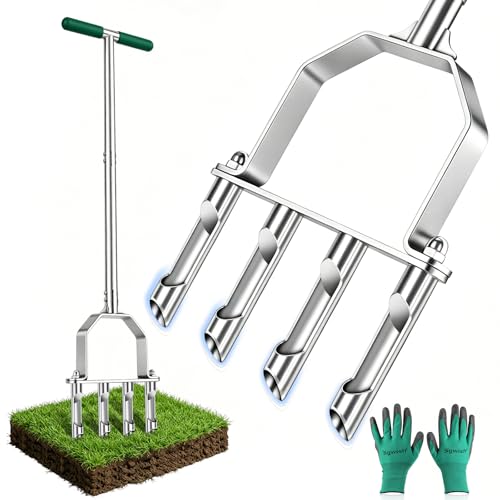
- 4 hollow tines boost coverage.
- Stainless steel resists rust and bending.
- Best after watering hard soil.
Best For: Manual core aeration on compacted clay soil
Bio Liquid Dethatcher

- Loosens soil with beneficial microbes.
- Breaks down thatch into nutrients.
- Easy hose-end application.
Best For: Clay lawns with compaction and thatch buildup
Spike Lawn Tool

- 15 spikes improve small-area coverage.
- Simpler than aerator shoes.
- Not meant for heavy clay soil.
Best For: Small lawns and light spot aeration
Liquid Alternative
Liquid Lawn Aerator (32 fl oz)
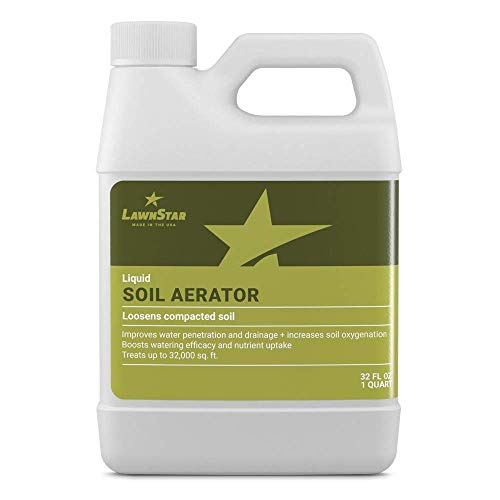
- Liquid treatment that loosens compacted soil
- Helps improve drainage and water penetration
- Covers up to 30,000 sq ft
Best For: Large lawns needing an easy alternative to mechanical aeration
Heavy-Duty Manual Pick
Lawn Aerator Tool with 15 Sharp Spikes

- 15-spike manual design for more holes per step
- Automatic soil ejection helps reduce clogging
- Heavy-duty steel with retractable spikes
Best For: Hands-on aeration of compacted or clay-like soil
Soil Conditioner Choice
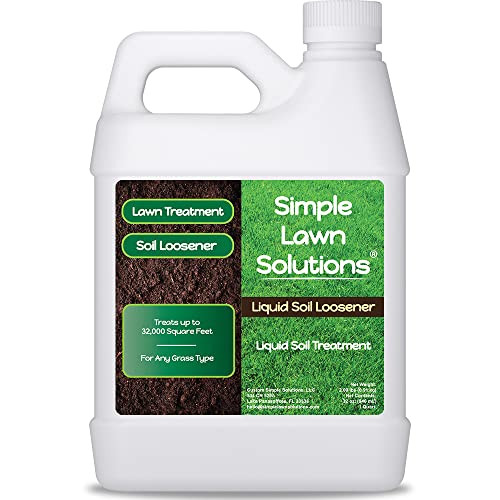
- Can be used alone or with core aeration
- Helps improve infiltration and vertical drainage
- Covers up to 32,000 sq ft
Best For: Improving drainage and loosening compacted soil
Self-Cleaning Manual Aerator
Adjustable 3-Height Lawn Tool for Hard Soil

- 3-inch steel spikes help loosen compacted ground.
- Self-cleaning spring design reduces debris buildup.
- Three height settings improve user comfort.
Best For: Homeowners who want a manual spike aerator for compacted yards
Hollow Tine Plug Aerator
3-Tine Core Tool for Compacted Soil
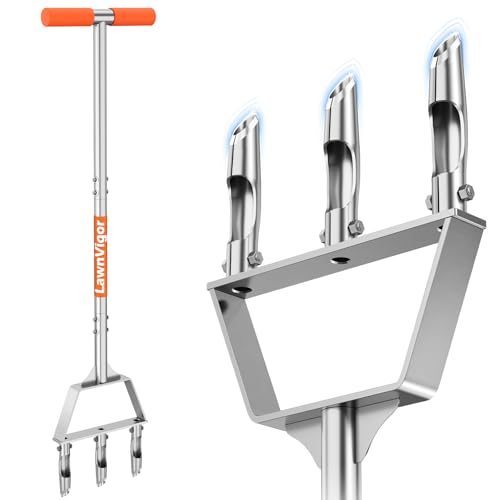
- Three hollow tines pull soil plugs for core aeration.
- Non-clogging design supports smoother use.
- Ergonomic handle helps reduce strain.
Best For: Gardeners who want a manual plug aerator for compacted soil
Replaceable Tine Core Aerator
Blue Manual Push Tool for Dense Lawns

- Three replaceable hollow tines remove soil cores.
- Steel construction is built for long-term use.
- Long handle and grip aim to reduce strain.
Best For: Lawn owners who want a durable core aerator with replaceable tines
Liquid Soil Conditioner – Covington Liquid Lawn Aerator
If you need a lawn aerator for clay soil without dragging out core tools, this liquid concentrate is built to loosen compacted ground and improve water and nutrient movement. It’s a practical option for lawns and gardens where clay-heavy soil is limiting root growth and turf performance.
Best For: Homeowners who want an easy liquid alternative to core aeration for clay-heavy lawns and gardens.
Pros:
- Helps loosen compacted soil and improve soil structure.
- Designed for clay-heavy yards, lawns, and gardens.
- Safe for pets and kids when used as directed.
- Made in the USA and used by professionals.
Cons:
- Liquid aeration is a slower soil-building approach than mechanical core aeration.
- Coverage and application rates need to be measured carefully.
For clay soil that needs long-term conditioning rather than a quick mechanical fix, Covington offers a low-effort route to better soil health. It stands out if you want a broad-use treatment that supports microbes, root growth, and moisture movement.
Heavy-Duty Core Tool – Bigwish Stainless Steel Aerator
This manual lawn aerator for clay soil is built for users who want a tougher, more direct aeration tool. With 4 hollow tines and a stainless steel build, it’s designed to penetrate compacted ground more efficiently, especially when the lawn is watered first.
Best For: DIY lawn owners who want a durable manual core aerator for compacted or clay soil.
Pros:
- 4 hollow tines create multiple holes in one step.
- Stainless steel construction resists rust and bending.
- Auto-eject design helps release soil cores without clogging.
- Ergonomic handle and adjustable height improve comfort.
Cons:
- Works best after watering the lawn 1-2 days before use.
- Manual core aeration still requires physical effort.
Bigwish is a strong pick if you want a reusable, heavy-duty tool rather than a liquid treatment. For clay soil that needs real core removal, the 4-tine design and hollow tips give it a practical edge.
Bio Liquid Dethatcher – Turf Titan Thatch Buster
If you want a lawn aerator for clay soil that also tackles thatch, this liquid formula is aimed at soil loosening and breakdown beneath the surface. It uses beneficial microbes and a hose-end sprayer to simplify application while supporting drainage and root growth over time.
Best For: Homeowners dealing with compacted, clay-heavy lawns who also need help breaking down thatch.
Pros:
- Uses beneficial microbes to loosen soil and improve airflow.
- Helps break down thatch and old clippings into nutrients.
- Includes a hose-end sprayer for easy application.
- Covers up to 6,000 sq ft per bottle.
Cons:
- Results build gradually and may take around 45 days to notice.
- Requires consistency and watering in as directed.
Turf Titan makes sense if your lawn has both compaction and thatch problems. It’s a process-focused liquid option rather than an instant fix, so it fits buyers who are comfortable with steady, long-term improvement.
Spike Lawn Tool – Walensee Manual Aerator
This manual lawn aerator is a straightforward choice for small areas where you want to improve airflow and water movement in the soil. It creates small holes with 15 spikes, but it’s not intended for heavy sticky clay soil, so it’s better suited to lighter compaction and spot jobs.
Best For: Small lawns, edges, and spot aeration where the soil is only lightly compacted.
Pros:
- 15 iron spikes provide broader coverage per step.
- Helps create channels for air, water, and nutrients.
- More stable than aerator shoes.
- Detachable design makes it easy to store.
Cons:
- Not recommended for heavy sticky clay soil.
- Best for small-area work rather than large lawns.
Walensee is a practical maintenance tool, but it’s not the strongest fit if your main challenge is dense clay. If your yard is small and only mildly compacted, it can still be a convenient and durable option.
Liquid Alternative – Liquid Lawn Aerator (32 fl oz)
If you want a lawn aerator for clay soil without dragging out heavy tools, this liquid option is built to loosen compacted ground and improve water penetration. It works as an alternative to core and mechanical aeration, so it’s a practical choice when you want a lower-effort treatment for dense soil conditions.
Best For: Homeowners who want an easy-to-apply liquid treatment for compacted lawns and poor drainage.
Pros:
- Designed to loosen and condition compacted soil
- Helps increase water uptake, drainage, and soil oxygenation
- Covers up to 30,000 sq ft for large-area treatment
- Uses a simple liquid application instead of mechanical aeration
Cons:
- Not a physical core or spike aerator
- Results depend on treating soil condition over time
This is a strong fit if your main goal is easier soil conditioning across a broad lawn. It’s especially appealing when compacted soil is the problem and you want a straightforward alternative to traditional aeration methods.
Heavy-Duty Manual Pick – Lawn Aerator Tool with 15 Sharp Spikes
For a lawn aerator for clay soil, this manual spike tool is a solid pick when you want direct soil penetration and a simple, reusable design. Its 15-spike layout is made to create more holes per step than traditional 4-prong tools, and the self-cleaning spring system is meant to keep it moving through tougher ground more smoothly.
Best For: Hands-on users who want a durable manual aerator for compacted yards and tougher clay-like soil.
Pros:
- 15 sharp spikes create more holes per step than 4-prong tools
- Automatic soil ejection helps reduce clogging during use
- Retractable spikes improve storage safety and protect the tips
- Heavy-duty steel build with ergonomic 36-inch handle
Cons:
- Manual operation requires physical effort
- Best performance depends on watering very hard, dry soil first
If you prefer a tool you can use by hand rather than a liquid treatment, this model offers the most direct aeration approach in the lineup. It’s especially practical for compacted lawns where you want to physically open the soil surface.
Soil Conditioner Choice – Liquid Soil Loosener
This lawn aerator for clay soil is aimed at improving soil structure rather than punching physical holes. The liquid conditioner can be used on its own or alongside mechanical or core aeration, and it’s intended to help water move downward more easily in compacted lawns with drainage issues.
Best For: Lawn owners who want a liquid conditioner to support drainage and soil loosening on compacted ground.
Pros:
- Can be used alone or with mechanical/core aeration
- Helps condition compact soil and improve water infiltration
- Covers up to 32,000 sq ft per 32 oz bottle
- Made in the United States and compatible with many grass types
Cons:
- Not a mechanical or spike-style aerator
- Designed more for conditioning than immediate physical breakup
This is a useful option if your clay soil needs better drainage and softer structure rather than a one-time spike treatment. It also fits well with existing fertilizer or aeration programs.
Self-Cleaning Manual Aerator – Adjustable 3-Height Lawn Tool for Hard Soil
If you need a lawn aerator for clay soil that’s built for repeated manual use, this steel spike model focuses on breaking up compaction without tearing up the turf. The 3-inch iron spikes, self-cleaning spring design, and adjustable handle make it a practical option for regular lawn care on hard, dense ground.
Best For: Homeowners who want a manual spike aerator with easier cleanup and adjustable comfort for compacted yards.
Pros:
- 3-inch steel spikes are designed to penetrate compacted soil and open channels for air, water, and nutrients.
- Built-in dual-layer spring design helps clear dirt and debris from the spikes during use.
- Three adjustable height settings can make the tool more comfortable for different users.
- Heavy-duty all-steel construction is made for long-term seasonal use.
Cons:
- Manual spike aerators still require physical effort on very dense ground.
- Not a core plug aerator, so it loosens soil rather than removing plugs.
- May be more work than powered options for larger lawns.
This is a solid choice if you want a durable, lawn-friendly manual aerator that emphasizes comfort and low-maintenance use. The self-cleaning design is especially helpful when working through sticky or compacted soil.
Hollow Tine Plug Aerator – 3-Tine Core Tool for Compacted Soil
If your lawn aerator for clay soil needs to remove plugs instead of just poking holes, this hollow-tine manual tool is built for core aeration. Its three hollow tines are designed to pull soil plugs, improve absorption, and support healthier grass growth in compacted areas.
Best For: Gardeners who want a manual plug aerator for compacted soil and better water penetration.
Pros:
- Three hollow tines remove soil plugs to create larger holes for air, water, and nutrients.
- Designed to prevent clogs during use with non-clogging hollow tine construction.
- Sturdy metal build and heat-treated tines are made for demanding lawn care.
- Ergonomic handle helps improve comfort and control while working.
Cons:
- Requires watering dry soil before use for best results.
- Needs careful vertical use; side-to-side rocking or prying is not recommended.
- Manual plug aeration can be slower than powered aerators on large lawns.
This is a strong pick when you want true core aeration rather than a simple spike tool. The hollow tines and clog-resistant design make it a useful fit for compacted yards that need deeper soil relief.
Replaceable Tine Core Aerator – Blue Manual Push Tool for Dense Lawns
For a lawn aerator for clay soil that leans toward durability and plug removal, this manual push core aerator uses three replaceable hollow tines to help relieve compaction. It’s built to improve airflow and nutrient absorption while giving you a long-handled, easier-to-control way to aerate dense grass areas.
Best For: Lawn owners who want a durable core aerator with replaceable tines for repeated use.
Pros:
- Three replaceable hollow tines remove soil cores to reduce compaction.
- Industrial-strength steel and tempered tines are built for long-term use.
- Long handle and easy-grip design help reduce back strain and hand fatigue.
- Quick assembly makes it simple to get started with lawn care.
Cons:
- Best results require watering dry areas before use.
- Must be pushed and pulled vertically without twisting or prying.
- Manual operation may be demanding on very hard clay soil.
This model stands out for users who want a tougher core aeration tool with replaceable parts. It’s a practical option for ongoing maintenance when you need repeated plug removal in compacted lawn areas.
How We Picked the Best Lawn Aerator for Clay Soil
For a Lawn Aerator for Clay Soil, we looked for products that address compaction in practical ways: effective soil penetration, ease of use, lawn size suitability, and whether the tool fits routine maintenance or a heavier refresh. We also favored designs that help clay drain better without creating unnecessary lawn damage or extra cleanup.
Quick Comparison: Liquid, Spike, and Core Aeration
Liquid aerators are the easiest option for regular maintenance and are often best when clay soil is mildly to moderately compacted. Spike aerators are better for homeowners who want a manual tool with immediate action and less mess. Core aerators remove plugs of soil, making them the strongest choice when clay is dense, traffic is heavy, or drainage problems are more severe.
Key Buying Factors for a Lawn Aerator for Clay Soil
Soil Condition
If your lawn feels hard underfoot, puddles after rain, or struggles with thin grass, clay compaction is likely the issue. Lightly compacted lawns may respond well to liquid treatments, while dense or long-neglected soil usually benefits more from core aeration.
Tool Type and Effort
Manual spike and core tools require physical effort, so look for ergonomic handles, stable foot platforms, or self-cleaning features if you plan to aerate by hand. Liquid products reduce labor significantly, but they work best as part of an ongoing lawn care plan rather than a one-time fix.
Coverage and Yard Size
Small to medium lawns can be handled with manual tools if you do not mind the work. Larger properties often benefit from liquid options for maintenance or from renting a mechanical aerator for the most efficient deep treatment.
Cleanup and Convenience
Core aerators create plugs, which improve soil exchange but require cleanup or breaking down left on the lawn. Spike tools are simpler to use, while liquid formulas are the cleanest and fastest to apply.
Who Should Buy Which Lawn Aerator for Clay Soil?
Choose a liquid Lawn Aerator for Clay Soil if you want simple upkeep, minimal mess, and an easier way to support drainage over time. Choose a spike aerator if you want a reusable hand tool for periodic maintenance and smaller yards. Choose a core aerator if your lawn has severe compaction, repeated puddling, or poor root development and you want the strongest physical aeration method.
If you are unsure, start with the least disruptive option that matches your lawn condition. In clay, consistency matters: regular aeration and better watering habits usually produce better long-term results than one aggressive treatment alone.