Choosing binoculars for low light comes down to brightness, contrast, and how well the optics hold detail at dawn, dusk, and under tree cover. The right model can make wildlife and birding much easier when the light drops.
Below, we focus on the best 10 options for clearer views in challenging lighting, with a mix of compact, mid-size, and high-powered picks for different budgets and uses.
Best 10 Binoculars for Low Light Picks for 2026
Low-Light Wildlife Pick

- 50mm objectives for brighter dim-light viewing
- Multi-coated lenses with BaK-4 prisms
- Waterproof, nitrogen-purged, tripod-adaptable
Best For: Birdwatching and hiking in changing outdoor light
Durable Day-to-Dusk Option

- HD optics with fully multi-coated lenses
- Waterproof, fogproof, shockproof build
- Includes GlassPak harness and tripod adaptability
Best For: Hunters and hikers needing rugged everyday optics
Premium Brightness Choice
Celestron TrailSeeker ED 10x50

- ED glass reduces color fringing
- Phase-corrected dielectric BaK-4 prisms
- Wide field of view for tracking wildlife
Best For: Birders wanting premium low-light clarity and color
Waterproof Value Pick

- Fully multi-coated lenses with BaK-4 prisms
- IPX7 waterproof and nitrogen-purged
- Compact, lightweight, and easy to carry
Best For: Wet-weather outdoor use and general low-light viewing
Low-Light Hunter Pick
15x52 HD Binoculars with Phone Adapter

- 52mm objective lens helps in dim conditions
- 15x power plus 22mm eyepiece for detail
- Upgraded phone adapter supports stable photos
Best For: Hunters and bird watchers needing brighter low-light detail
Reliable All-Around Choice

- 10x42 design balances brightness and steadiness
- Fully multi-coated lenses boost light transmission
- Waterproof, fogproof, and tripod adaptable
Best For: Buyers wanting a dependable everyday binocular with solid low-light performance
Brightest View Option
18x56 UHD Binoculars with Phone Adapter

- 56mm objective lens is tuned for low-light brightness
- Wide field of view helps follow moving subjects
- Upgraded phone adapter makes capture easier
Best For: Bird watchers and travelers wanting the brightest low-light view
Compact Low-Light Travel Pick
Occer 12x25 Compact Binoculars
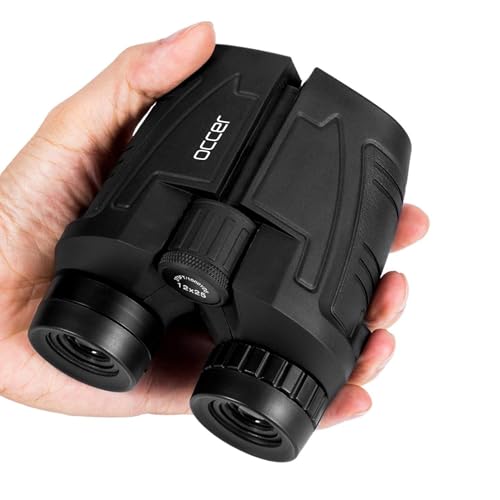
- 12x25 compact binoculars with FMC coating and BAK4 prism
- Low-light night vision capability, but not for full darkness
- Adjustable eyecups, waterproof body, and one-hand portability
Best For: Travel, kids, and casual low-light viewing
Bright Low-Light All-Rounder
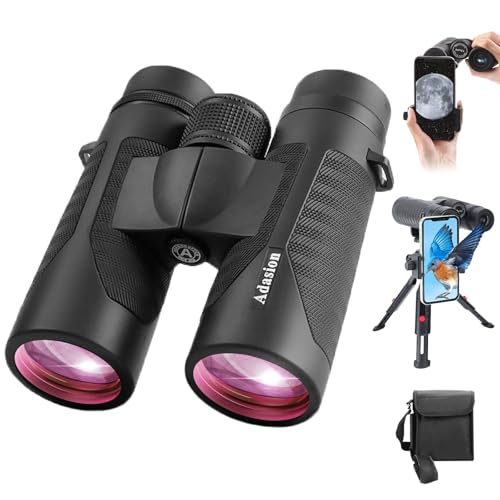
- 42mm objective lens for brighter dim-light viewing
- Fully multi-coated optics with BAK4 prisms
- Includes phone adapter, tripod, and IPX7 waterproofing
Best For: Bird watching and outdoor use in low light
Maximum Brightness Budget Pick

- 70mm objective lens for maximum light transmission
- 20x magnification with BAK4 prisms and FMC optics
- Large and heavy, but built for bright low-light viewing
Best For: Maximum brightness in low light, if size is not an issue
Low-Light Wildlife Pick – Celestron Outland X 10×50
If you want binoculars for low light that still feel easy to carry on the trail, the Celestron Outland X 10×50 is built around bright 50mm objectives, multi-coated lenses, and BaK-4 prisms. It is a practical choice for birdwatching, hiking, and spontaneous wildlife viewing when the light starts to drop.
Best For: Birdwatchers and hikers who want a bright, weather-ready 10×50 binocular for general low-light outdoor use.
Pros:
- 50mm objective lenses help deliver brighter views in dimmer conditions.
- Multi-coated optics and BaK-4 prisms support sharp, color-accurate images.
- Waterproof and nitrogen-purged housing adds confidence in rain or humidity.
- Tripod adapter threads make longer viewing sessions steadier.
Cons:
- 10x magnification can be less steady without support during extended viewing.
- Tripod adapter is not included.
Overall, this is a solid low-light all-rounder if you value brightness, portability, and weather protection over premium extras. It covers the basics well for outdoor viewing after sunset or in shaded terrain.
Durable Day-to-Dusk Option – Vortex Triumph HD 10×42
The Vortex Triumph HD 10×42 is a strong pick if you want binoculars for low light with a more compact 42mm objective size and an HD optical system. Fully multi-coated lenses are designed to improve light transmission, while the roof prism build and rugged chassis make it a practical companion for hunts and hikes.
Best For: Hunters and hikers who want a tough, full-size binocular with dependable low-light performance and easy carry.
Pros:
- HD optical system and fully multi-coated lenses support excellent image quality and light transmission.
- Waterproof, fogproof, and shockproof construction is made for rough outdoor use.
- Tripod adaptable with adjustable eyecups and diopter for comfortable viewing.
- Includes a GlassPak harness for faster access and easier carry.
Cons:
- 42mm objectives are bright, but not as light-gathering as larger 50mm models.
- Heavier than compact binoculars at 2.3 pounds.
This model makes sense if durability and image quality matter as much as brightness. It is especially appealing for anyone who wants a no-nonsense optic for field use in mixed lighting.
Premium Brightness Choice – Celestron TrailSeeker ED 10×50
For binoculars for low light with a more refined optical setup, the Celestron TrailSeeker ED 10×50 uses ED glass, a 50mm aperture, and phase-corrected dielectric-coated BaK-4 prisms to maximize brightness and control color fringing. It is aimed at users who want sharp, high-contrast viewing for birdwatching and outdoor observation in dimmer conditions.
Best For: Birders and outdoor observers who want premium low-light clarity, color accuracy, and a wide field of view.
Pros:
- ED glass helps reduce color fringing for sharper, cleaner images.
- 50mm objectives and a 5mm exit pupil support bright viewing in varied light.
- Phase-corrected, dielectric-coated BaK-4 prisms maximize light transmission.
- Wide 341 ft field of view helps follow moving wildlife.
Cons:
- More of a premium field optic than a simple budget buy.
- 10x power may benefit from tripod support for longer sessions.
This is the most optics-focused option in the group and a good fit if you care about image quality first. It stands out for brightness, color fidelity, and tracking moving subjects in challenging light.
Waterproof Value Pick – Bushnell H2O Xtreme 10×42
The Bushnell H2O Xtreme 10×42 is a straightforward choice for binoculars for low light when you want reliable brightness without overcomplicating the spec sheet. Fully multi-coated glass and BaK-4 prisms are designed to keep images clear and bright, while the waterproof, fogproof build makes it useful for wet or unpredictable outings.
Best For: Outdoor users who want a compact, waterproof 10×42 binocular for hunting, birdwatching, boating, and travel.
Pros:
- Fully multi-coated lenses and BaK-4 prisms support bright, clear views.
- IPX7 waterproof rating and nitrogen purging help with wet conditions and fog resistance.
- Rubber armor and non-slip grips improve durability and handling.
- Compact and lightweight enough for easy packing and carry.
Cons:
- 42mm objectives are less light-gathering than 50mm binoculars.
- Best suited to general outdoor use rather than specialized low-light observation.
If you want a dependable all-purpose binocular that can handle weather and still perform well at dusk, this is a sensible pick. It balances brightness, portability, and ruggedness in a familiar 10×42 format.
Low-Light Hunter Pick – 15×52 HD Binoculars with Phone Adapter
If you want binoculars for low light that lean toward hunting and wildlife viewing, this 15×52 model is built around brightness and detail. The 52mm objective lens, BAK4 dielectric-coated prisms, and high-transmission glass are designed to perform in overcast conditions, under tree cover, at daybreak, and in the last light of day.
Best For: Hunters and bird watchers who need a brighter image in dim outdoor conditions and also want phone-capture support.
Pros:
- 15x magnification with a 22mm eyepiece for a larger, clearer image
- 52mm objective lens and high-transmission optics tuned for low-light viewing
- Upgraded universal phone adapter with secure, stable alignment
- Twist-down rubber eyecups and long eye relief for glasses or non-glasses users
Cons:
- High magnification can be harder to hold steady than lower-power binoculars
- More specialized for low-light distance viewing than compact everyday use
Overall, this is a strong fit if your priority is getting more usable detail when the light drops. It combines a bright optical setup with a practical smartphone adapter, making it a flexible choice for hunting, birding, and dusk viewing.
Reliable All-Around Choice – Vortex Crossfire HD 10×42
The Vortex Crossfire HD 10×42 is a practical option if you want binoculars for low light without moving into oversized, high-magnification territory. Its fully multi-coated lenses, select glass elements, and 42mm objective lenses are aimed at strong light transmission, sharpness, and color fidelity in a durable, compact roof-prism design.
Best For: Buyers who want a dependable general-purpose binocular with solid low-light performance, portability, and a lifetime warranty.
Pros:
- 10×42 format balances brightness, stability, and easy handling
- Fully multi-coated lenses improve light transmission
- Waterproof, fogproof, and nitrogen-purged for all-weather use
- Tripod adaptable with adjustable eyecups and diopter control
Cons:
- Not as specialized for extreme low-light use as larger-objective models
- Lower magnification than long-range high-powered options
This is the safest all-around pick in the group if you value dependable optics and rugged construction. It should suit everyday birding, travel, and outdoor use where consistent viewing matters more than chasing the highest magnification.
Brightest View Option – 18×56 UHD Binoculars with Phone Adapter
For shoppers comparing binoculars for low light, this 18×56 model stands out for its large 56mm objective lens and dielectric-coated BAK4 prisms. The product is explicitly positioned for bright, clear viewing in dawn, dusk, cloudy weather, and dense forest cover, while also offering a wide field of view and an upgraded phone adapter.
Best For: Bird watchers, travelers, and outdoor users who want maximum brightness in low light along with a wide view and phone compatibility.
Pros:
- 56mm objective lens and dielectric-coated BAK4 prisms for bright low-light images
- Wide field of view helps track moving subjects more easily
- Upgraded universal phone adapter for quick, stable setup
- Waterproof, fogproof, lightweight, and ergonomically designed
Cons:
- 18x magnification can be more demanding to hold steady
- Larger objective lens may be less compact than smaller travel binoculars
Among these three, this is the most clearly low-light-focused option on paper. If your priority is seeing as much detail as possible when light is limited, and you want a wider field plus phone capture support, it makes a compelling case.
Compact Low-Light Travel Pick – Occer 12×25 Compact Binoculars
If you want binoculars for low light that stay small and easy to carry, the Occer 12×25 is built for simple everyday use. It combines 12x magnification, a wide field of view, and FMC/BAK4 optics in a compact body, making it a practical option for travel, bird watching, cruises, and casual outdoor viewing. The product also notes low light night vision capability, though not for completely dark nights.
Best For: Travelers, kids, and casual users who want a compact low-light-capable binocular for daytime and dusk viewing.
Pros:
- Compact and lightweight enough for one-handed use and easy carrying
- 12x magnification with FMC coating and BAK4 prism for clearer imaging
- Adjustable eyecups and long eye relief help glasses wearers
- Waterproof design and rubber armor improve grip and durability
Cons:
- 25mm objective lens is smaller than full-size low-light binoculars
- Low-light use is limited and not meant for complete darkness
- Best suited to casual viewing rather than serious long-distance optics
Overall, this model makes sense if portability matters more than maximum brightness. It is a budget-friendly, compact choice for mixed use where low-light performance is helpful but not the main priority.
Bright Low-Light All-Rounder – Adasion 12×42 Binoculars
For buyers comparing binoculars for low light, the Adasion 12×42 is the most balanced option here. Its 42mm objective lens, fully multi-coated optics, and BAK4 prisms are designed to pull in more light and deliver brighter views in dim conditions. It also includes a phone adapter and tripod, which makes it a strong pick for steady observation and image capture.
Best For: Bird watchers, cruise travelers, and general outdoor users who want brighter low-light performance with extra accessories.
Pros:
- 42mm objective lens helps improve brightness in dim lighting
- Fully multi-coated lenses and BAK4 prisms support crisp, vivid views
- Includes phone adapter and tripod for stable shooting
- IPX7 waterproof and fog-proof design suits outdoor use
Cons:
- Larger and heavier than compact binoculars at 1.25 lbs
- Eye relief and fit may require adjustment for different users
- More features than some casual users may need
If low-light brightness is a top concern, this is the strongest all-around choice in the group. It offers a good mix of light-gathering power, portability, and extra accessories for outdoor viewing.
Maximum Brightness Budget Pick – WOZEL 20×70 Binoculars
If you need binoculars for low light and care most about light gathering, the WOZEL 20×70 stands out with its oversized 70mm objective lens. The product notes that this design provides maximum light transmittance for bright, clear images in low-light conditions, while BAK4 prisms and FMC optics help preserve clarity and color. It is a large, high-powered binocular meant for outdoor viewing where brightness matters more than portability.
Best For: Users who want the brightest low-light view possible and do not mind a larger, heavier binocular.
Pros:
- 70mm objective lens is built for strong light transmission in dim conditions
- 20x magnification provides very detailed distant viewing
- BAK4 prisms and FMC optics improve image quality and reduce glare
- Rubber-coated body and neck strap help with outdoor handling
Cons:
- Heavy at about 2.8 lbs, so it is less portable
- Not water resistant, which limits all-weather use
- Large size is less convenient for travel or quick carry
This model is best viewed as a brightness-first binocular rather than a compact everyday option. If your priority is low-light performance and you can handle the bulk, it offers the strongest light-gathering specs in this roundup.
How We Picked These Binoculars for Low Light
We prioritized optical performance that matters most when light is limited: larger objective lenses, quality glass and coatings, stable handling, and a usable exit pupil for brighter images. We also considered real-world portability, weather resistance, and whether each model suits birding, wildlife, hunting, or general outdoor use.
Because Binoculars for Low Light are often used at dawn and dusk, we gave extra weight to models that balance brightness with comfort. Extremely high magnification can look good on paper, but it can also make the image dimmer and harder to hold steady.
Quick Comparison: What Stands Out
In this group, 10×42 models are the most balanced all-around choice, offering a practical mix of brightness, field of view, and hand-held stability. 10×50 and 10×56-style designs generally gather more light, which can help in dim conditions. Compact 12×25 options are best for travel and convenience, but they will not match larger binoculars in low-light performance.
If you want the clearest views at the edges of legal hunting light or in shaded forest conditions, favor larger objectives and better glass quality over sheer magnification. For phone photography or tripod use, check that the adapter and mounting setup are sturdy enough for your intended use.
Key Buying Factors for Binoculars for Low Light
Objective Lens Size
Larger objective lenses, such as 42mm, 50mm, or 56mm, usually deliver brighter images in dim light. They also tend to be heavier, so there is a tradeoff between image brightness and comfort during long outings.
Magnification
Moderate magnification is usually best for hand-held use. Higher-power models can show more detail, but they also amplify shake and can make the image appear darker if the optics are not strong enough.
Glass Quality and Coatings
Fully multi-coated lenses, phase-corrected prisms, and ED glass can improve contrast, sharpness, and color accuracy. These features matter a lot when you are trying to separate a bird or animal from a shadowy background.
Build and Weather Resistance
For outdoor use, look for waterproof and fog-proof construction. Rubber armor and a secure grip are also helpful when conditions are wet, cold, or muddy.
Comfort and Stability
A bright image is only useful if you can hold it steady. Make sure the binoculars feel balanced in your hands and consider a tripod adapter if you plan to use higher magnifications for extended viewing.
Who Should Buy Which Binoculars for Low Light?
If you want the best all-around choice, a 10×42 or 10×50 model is the safest place to start. Birders and wildlife viewers who value clarity in shade should lean toward better glass and wider, steadier views. Hunters and dawn/dusk users may prefer larger objectives for extra brightness. Travelers and casual users may choose a compact model, but they should expect a real compromise in low-light performance.
In short, the best Binoculars for Low Light are the ones that match your viewing distance, your typical conditions, and how much size and weight you are willing to carry.