If you ride with Komoot, the right head unit can make routing, rerouting, and turn-by-turn guidance much smoother. The best models combine clear navigation, dependable GPS, and controls that work well in real-world conditions.
Below, we’ve focused on bike computers with Komoot compatibility across premium and budget-friendly options, so you can find the best fit for road, gravel, commuting, or endurance rides.
Best 10 Bike Computers with Komoot Picks for 2026
Compact Navigation Pick
Garmin Edge 540 for data-driven riding

- Button controls for simple operation
- Multi-band GNSS for better positioning
- Up to 26 hours of battery life
Best For: Riders who want compact navigation and training tools
Touch-and-Swipe Flagship
Wahoo ELEMNT ACE for easy control

- 3.8-inch display with touch controls
- AirBoost and AirDrag aero metrics
- 30-hour battery life
Best For: Cyclists who want a large, easy-to-use ride computer
Endurance Power Pick
Garmin Edge 1040 Solar for very long rides
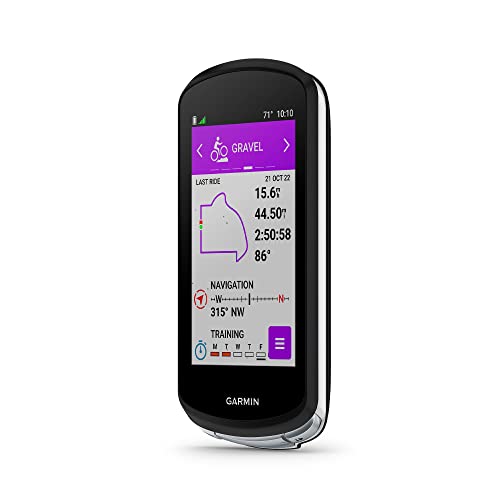
- Solar charging for extra battery life
- Supports Komoot and other platforms
- Multi-band GNSS and climbing tools
Best For: Endurance riders who need long battery life
Premium Touchscreen Choice
Garmin Edge 1050 with smart ride features

- Vivid touchscreen with speaker prompts
- Road hazard alerts and group-ride messaging
- Up to 60 hours in battery saver mode
Best For: Riders who want a premium touchscreen and connected features
Touchscreen Offline Nav Pick
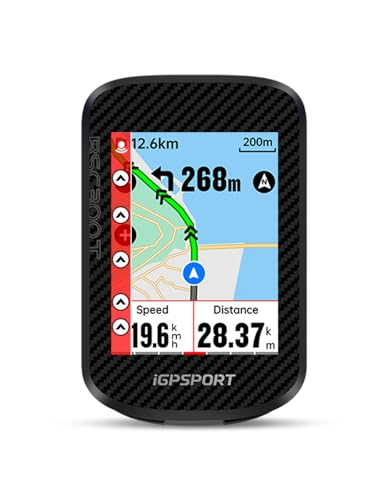
- Komoot sharing via iGPSPORT app
- Offline maps, route preview, turn prompts
- ANT+ / Bluetooth sensor support
Best For: Riders who want an affordable touchscreen GPS computer with offline maps and Komoot syncing.
Premium Training Navigator

- 3.5-inch color touchscreen with detailed maps
- Adaptive training, stamina tracking, ClimbPro
- Road hazard alerts and incident detection
Best For: Serious cyclists who want a top-tier cycling computer for training, navigation, and safety features.
Compact Komoot Route Option

- Komoot route import supported
- One-touch navigation and back-to-start guidance
- 25-hour battery with Type-C charging
Best For: Riders who want a compact GPS bike computer with Komoot route import and simple navigation.
Flagship GPS All-Rounder

- Supports Komoot plus Strava and TrainingPeaks
- Multi-band GNSS improves positioning accuracy
- Up to 35 hours, or 70 in battery saver mode
Best For: Riders who want a premium all-in-one bike computer
Compact Route Pilot

- Imports Komoot routes and supports turn-by-turn prompts
- Auto-downloads saved routes when synced with compatible accounts
- Includes live tracking, notifications, and radar support
Best For: Riders who want a compact, easy-to-use navigation computer
Adventure Navigation Pick

- Supports Komoot route imports and turn-by-turn prompts
- Dual-band GPS helps in forests and urban areas
- 25-hour battery life for longer rides
Best For: Explorers who want confident navigation on tricky routes
Compact Navigation Pick – Garmin Edge 540 for data-driven riding
If you want bike computers with komoot compatibility in a compact, button-controlled package, the Garmin Edge 540 is built for riders who care more about clean navigation and training detail than a big touchscreen. It pairs advanced GPS features with ride planning, multi-band GNSS positioning, and performance metrics that help you stay on course in demanding conditions.
Best For: Riders who want a compact, reliable Garmin computer for navigation, structured training, and long rides.
Pros:
- Button controls are easy to use in rough weather or with gloves.
- Multi-band GNSS improves positioning accuracy in challenging environments.
- ClimbPro, power guide, stamina insights, and adaptive coaching add useful training depth.
- Up to 26 hours of battery life in demanding use cases.
Cons:
- Smaller 2.6-inch display is less expansive than premium touchscreen models.
- Requires compatible power meter and heart rate monitor for some advanced training features.
The Edge 540 is a strong fit if you want dependable Garmin navigation and performance tools without moving up to the largest or most expensive unit. It is especially practical for riders who value button simplicity and long-ride endurance.
Touch-and-Swipe Flagship – Wahoo ELEMNT ACE for easy control
Among bike computers with komoot-friendly ride planning workflows, the Wahoo ELEMNT ACE stands out for its large 3.8-inch display and easy touch-based control. It is designed to make setup and in-ride interaction feel quick and simple, while also adding real-time aero data for cyclists who want more performance feedback.
Best For: Cyclists who want a large, easy-to-control computer with strong battery life and performance-focused ride data.
Pros:
- Large 3.8-inch LCD makes maps and metrics easy to read.
- Touch, swipe, and press controls are convenient across different riding conditions.
- AirBoost and AirDrag metrics provide live aero awareness.
- 30-hour battery life is strong for long training days.
Cons:
- Heavier than some compact bike computers at 208 g.
- Advanced aero metrics may be more than casual riders need.
The ELEMNT ACE is a compelling choice if you want a modern, app-connected bike computer that emphasizes ease of use. Its larger screen and touch controls make it a practical pick for riders who prefer a more interactive interface.
Endurance Power Pick – Garmin Edge 1040 Solar for very long rides
If you are comparing bike computers with komoot support and want maximum ride endurance, the Garmin Edge 1040 Solar is built for big days in the saddle. Its solar-assisted battery, multi-band GNSS, and deep training features make it a strong choice for riders who spend a lot of time exploring unfamiliar routes.
Best For: Endurance riders and bikepackers who want long battery life plus advanced navigation and training tools.
Pros:
- Solar charging extends battery life up to 100 hours in battery saver mode.
- Multi-band GNSS helps improve positioning accuracy.
- Includes advanced tools like ClimbPro, power guide, and stamina insights.
- Supports smart-device apps and platforms including Strava, Komoot, and TrainingPeaks.
Cons:
- More complex than simpler cycling computers.
- Priced and positioned for riders who will use the advanced feature set.
The Edge 1040 Solar is a standout option if battery life is your top priority and you want a computer that can handle long, demanding rides. It combines serious navigation with training features that suit structured athletes and adventure riders alike.
Premium Touchscreen Choice – Garmin Edge 1050 with smart ride features
For riders shopping for bike computers with komoot-compatible planning and a premium on-bike experience, the Garmin Edge 1050 leans into a vivid touchscreen, speaker prompts, and connected group-ride features. It is designed for cyclists who want navigation, coaching, and ride awareness in one polished unit.
Best For: Riders who want Garmin’s most feature-rich touchscreen computer for navigation, group rides, and training.
Pros:
- Large vivid touchscreen makes route planning and ride data easy to read.
- Built-in speaker delivers workout and navigation prompts plus a bike bell.
- Road hazard alerts, live location sharing, and group-ride messaging add real-world usefulness.
- Up to 60 hours of battery life in battery saver mode.
Cons:
- Premium feature set will likely be more than some riders need.
- Battery life in demanding use cases is much shorter than its battery saver rating.
The Edge 1050 is the most feature-packed option in this group, and it makes sense for riders who want a high-end touchscreen experience. If you value safety alerts, onboard audio, and deeper ride connectivity, it is a compelling flagship choice.
Touchscreen Offline Nav Pick – iGPSPORT BSC300T
If you want bike computers with komoot support plus detailed navigation, the iGPSPORT BSC300T is built around route handling and data depth. It offers offline map download, route preview, turn prompts, and off-course warnings, while also syncing ride data to Komoot through the iGPSPORT app.
Best For: Riders who want an affordable touchscreen GPS computer with offline maps, Komoot syncing, and broad sensor support.
Pros:
- Supports Komoot sharing through the iGPSPORT app, plus Strava syncing.
- Offline map download with route preview, turn prompts, and off-course warning.
- 2.4-inch touchscreen plus 6-button control for flexible operation.
- Works with ANT+ and Bluetooth devices, including sensors and e-bike data.
Cons:
- Type-C cable is not included in the box.
- Screen size is smaller than premium flagship bike computers.
The BSC300T gives you a lot of navigation and training value for the size, especially if Komoot compatibility matters. It’s a practical choice for riders who want maps, alerts, and data sharing without moving up to a premium price tier.
Premium Training Navigator – Garmin Edge 1050 Bundle
The Garmin Edge 1050 bundle is a premium option for cyclists who want a bike computer that handles navigation, training, and safety in one device. It offers a vivid 3.5-inch color touchscreen, detailed maps, adaptive training tools, road hazard alerts, and incident detection for more confident riding.
Best For: Serious cyclists who want a top-tier cycling computer for training, navigation, and safety features.
Pros:
- Large 3.5-inch vivid color touchscreen with detailed maps and data views.
- Adaptive training features including stamina tracking, workout suggestions, and ClimbPro.
- Road hazard alerts, incident detection, and Group Ride support.
- Up to 20 hours of battery life, or 60 hours in battery saver mode.
Cons:
- No Komoot compatibility is mentioned in the supplied notes.
- Premium bundle size and feature set may be more than casual riders need.
For riders who care most about performance insights and navigation clarity, the Edge 1050 stands out as the most advanced option here. It’s especially compelling if you want a feature-rich computer rather than a simple route display.
Compact Komoot Route Option – iGPSPORT BSC200S
If you’re shopping bike computers with komoot support and want something compact, the iGPSPORT BSC200S focuses on route navigation and easy everyday use. You can create routes in the iGPSPORT app or import third-party routes from Komoot, then use one-touch navigation, back-to-start guidance, and ride record navigation.
Best For: Riders who want a compact GPS bike computer with Komoot route import, long battery life, and simple navigation.
Pros:
- Imports third-party routes from Komoot, Strava, and Ride with GPS.
- One-touch navigation, back-to-start, and ride record navigation.
- 25-hour battery life with fast Type-C charging.
- Supports over 100 riding data fields and customizable display pages.
Cons:
- Uses buttons instead of a touchscreen.
- Smaller 2.4-inch display may feel basic compared with premium units.
The BSC200S is a strong pick if route import from Komoot matters more than advanced training extras. It keeps navigation straightforward, adds useful smart alerts, and stretches battery life well for longer rides.
Flagship GPS All-Rounder – Garmin Edge 1040
For riders comparing bike computers with komoot, the Garmin Edge 1040 stands out as a full-featured option for navigation, training, and long-ride reliability. It supports Komoot alongside Strava, TrainingPeaks, and other platforms, while multi-band GNSS helps improve positioning in tough environments.
Best For: Cyclists who want a premium bike computer with deep training tools, strong navigation, and long battery life.
Pros:
- Multi-band GNSS for improved positioning accuracy in challenging environments
- Works with Komoot plus other major training and routing platforms
- Up to 35 hours of battery life in demanding use cases, or up to 70 hours in battery saver mode
- Includes ride type-specific maps, searchable points of interest, and stamina/power guidance features
Cons:
- Premium feature set may be more than casual riders need
- Uses a 3.5-inch touchscreen, which may not suit riders who prefer a simpler compact unit
This is the most capable option in the group if you want navigation and performance tracking in one device. For long-distance riders who rely on Komoot routes and want plenty of battery headroom, it is a strong top-tier pick.
Compact Route Pilot – Wahoo ELEMNT Bolt V3
If you want bike computers with komoot that make routing feel simple, the Wahoo ELEMNT Bolt V3 is built around easy turn-by-turn navigation. It can import routes from Komoot and other services, auto-download saved routes when synced, and even generate routes on demand from the device or companion app.
Best For: Riders who want a compact, straightforward computer with strong route handling and smart navigation prompts.
Pros:
- Imports Komoot routes and files like GPX and TCX for turn-by-turn guidance
- Automatic route downloads and workout uploads when synced with compatible accounts
- On-device and app-based route generation for flexible trip planning
- Smart notifications, live tracking, and ANT+ radar integration add useful ride features
Cons:
- 20-hour battery life is solid, but shorter than some larger endurance-focused units
- 2.3-inch LCD screen is relatively small for riders who prefer bigger maps
The Bolt V3 is a practical choice if you value navigation simplicity over a feature-heavy display. It works especially well for riders who build routes in Komoot and want a device that gets them rolling quickly.
Adventure Navigation Pick – Wahoo ELEMNT ROAM V3
Among bike computers with komoot, the Wahoo ELEMNT ROAM V3 is the best fit if your rides take you into more demanding terrain. It supports Komoot route imports, offers on-device turn-by-turn navigation, and adds dual-band GPS for more confident positioning when signals get messy.
Best For: Explorers and endurance riders who want better navigation confidence on mixed or tricky routes.
Pros:
- Dual-band GPS improves accuracy in forests, cities, and other obstructed areas
- Supports Komoot routes and other file types with automatic turn-by-turn prompts
- On-demand route generation from the device or companion app
- 25-hour battery life gives more ride time than the smaller Bolt model
Cons:
- Heavier than the Bolt V3 at 109 g
- Still uses an LCD display, so riders seeking a high-resolution color touchscreen may want to look elsewhere
This is the strongest pick for riders who prioritize route confidence and exploration. If Komoot is central to your planning, the ROAM V3 adds the navigation tools and GPS support to match.
How We Picked These Bike Computers with Komoot
We prioritized models that offer straightforward Komoot route syncing, reliable navigation prompts, and practical ride data without unnecessary complexity. We also looked at screen readability, battery life, mounting ecosystem, waterproofing, and how easy each device is to use mid-ride.
Quick Comparison
Some of these units are built for premium navigation and training, while others are better for riders who want dependable route guidance at a lower price. Larger displays and advanced mapping usually suit long-distance and all-day riding, while compact units tend to work well for road riders who want a lighter setup.
Key Buying Factors for Bike Computers with Komoot
Navigation Quality
Check whether the computer offers full map support, turn-by-turn cues, rerouting, and off-course warnings. For Bike Computers with Komoot, smoother course transfer and clear directions matter more than raw feature count.
Display and Controls
A bright, high-contrast screen is easier to read in sunlight, while touchscreen controls can be convenient but may be less ideal in heavy rain or with gloves. Button-controlled devices often appeal to riders who want more reliable operation in rough conditions.
Battery Life
Long rides demand strong battery performance, especially if you use navigation, sensors, and backlighting together. Solar-assisted models can be attractive for endurance cyclists, but standard battery life is often enough for daily riding and weekend trips.
Connectivity and Ecosystem
Look for Bluetooth and ANT+ support if you plan to pair heart rate straps, power meters, radar, or smart trainers. If you use multiple cycling apps, check how easily Komoot routes sync and how the device handles updates.
Who Should Buy Which Bike Computers with Komoot?
If you want top-tier mapping and a premium experience, choose a flagship Garmin or Wahoo model. If you value lightweight simplicity and strong navigation basics, a smaller midrange unit may be the better fit. Budget-conscious riders can still get useful Komoot route guidance from more affordable GPS computers, especially for commuting or casual fitness rides.
For endurance riders, prioritize battery life and screen size. For everyday road cyclists, a compact, fast, and easy-to-mount computer may be all you need. The best choice depends on how often you navigate new routes, how long you ride, and how much detail you want on the handlebars.