Choosing a bike computer with bluetooth sensors can make every ride easier to track, navigate, and analyze. Whether you want simple speed and distance data or a full-featured GPS unit, the right model should pair quickly and stay readable on the move.
In this roundup, we focused on practical features riders actually use: reliable wireless connectivity, clear displays, strong battery life, and weather-ready designs for commuting, training, and long-distance cycling.
Best 10 Bike Computer with Bluetooth Sensors Picks for 2026
Premium All-Rounder
Garmin Edge 1050 Premium Cycling Computer

- 3.5-inch vivid touchscreen with route planning
- Bluetooth smart features and ride alerts
- Works with power meter and heart rate monitor
Best For: Serious riders wanting premium navigation and coaching
Budget Navigation Pick
iGPSPORT BSC200S GPS Bike Computer

- Bluetooth and ANT+ sensor support
- App route import from Strava, Komoot, and more
- Up to 25-hour battery life with IPX7 waterproofing
Best For: Value-focused riders who want navigation and sensor support
Sensor-Friendly Value Pick

- ANT+ support for heart rate, speed, cadence, and power
- Bluetooth app setup and Strava sync
- Auto backlight with IP67 waterproofing
Best For: Budget buyers who need reliable sensor pairing
Sensor Add-On
Magene Speed/Cadence Sensor S3+
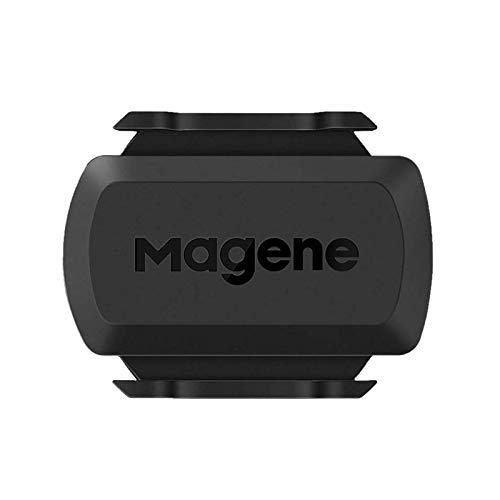
- Bluetooth and ANT+ compatibility
- Works as either speed or cadence sensor
- Compact IP66 accessory for training setups
Best For: Riders adding speed or cadence data to a compatible setup
GPS Value Pick
CYCPLUS M1 GPS Bike Computer with Sensors

- Includes speed/cadence sensor set
- Bluetooth and ANT+ sensor support
- 60-hour battery life and 2.9-inch screen
Best For: Riders who want a GPS bike computer with included sensors and Strava syncing
Touchscreen Navigation Pick
COOSPO CS600 Color GPS Bike Computer

- Color touchscreen with auto-backlight
- Built-in route navigation and breadcrumb trail
- Bluetooth/ANT+ with app sync to Strava
Best For: Riders who want route navigation and a color touchscreen with app syncing
Long-Ride Battery Pick

- Up to 70 hours of battery life
- Bluetooth sync to app and Strava
- Shows 12 data fields across 3 tables
Best For: Riders who want long battery life and flexible ride data display
Compact Value GPS Head Unit
COOSPO BC107 Wireless GPS Bike Computer
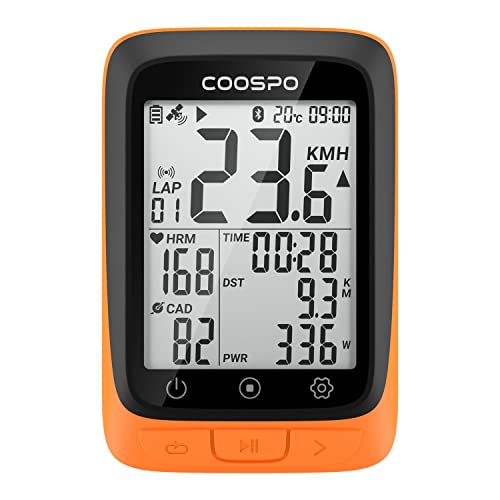
- ANT+ support for heart rate, speed/cadence, and power meters
- 2.4-inch compact display with lightweight build
- Bluetooth app pairing, GPS/Beidou, and Strava sync via CoospoRide
Best For: Budget-minded riders who need ANT+ sensor support and app syncing
Ultra-Light Ride Tracker
CYCPLUS G1 Wireless GPS Bike Computer

- 70g compact body with wireless setup
- Automatic backlight and sunlight-readable display
- IPX6 waterproof with long battery life
Best For: Riders who want a lightweight, simple GPS bike computer
Dual-Protocol Smart Pick
iGPSPORT BSC100S GPS Bike Computer

- Bluetooth 5.0 and ANT+ support for multiple sensors
- 2.6-inch anti-glare screen with 40+ riding data fields
- 5-satellite positioning plus app sharing to Strava/Komoot
Best For: Cyclists who want Bluetooth and ANT+ compatibility with a bigger screen
Premium All-Rounder – Garmin Edge 1050 Premium Cycling Computer
If you want a bike computer with bluetooth sensors that leans premium in every way, the Garmin Edge 1050 is built for riders who value navigation, training, and ride awareness in one device. Its vivid 3.5-inch touchscreen, smart connectivity, and advanced cycling metrics make it a strong choice for serious road and endurance riders.
Best For: Riders who want a high-end cycling computer with deep navigation, coaching, and connected features.
Pros:
- Large vivid color touchscreen with responsive route creation and map planning.
- Bluetooth connectivity plus smartphone features like group ride messaging, live locations, and incident detection alerts.
- Built-in speaker, bike bell, Garmin Pay, and road hazard alerts add practical convenience.
- Works with compatible power meter and heart rate monitor for coaching, power guidance, and stamina-based adjustments.
Cons:
- Premium feature set is likely more than casual riders need.
- Many advanced training features depend on compatible accessories.
- Higher-end device may be overkill if you only need basic ride tracking.
This is a feature-rich option for cyclists who want one of the most complete connected ride computers available. If your priority is a polished screen, strong navigation, and broad smart connectivity, the Edge 1050 stands out.
Budget Navigation Pick – iGPSPORT BSC200S GPS Bike Computer
The iGPSPORT BSC200S is a practical bike computer with bluetooth sensors support for riders who want navigation, notifications, and solid battery life without a complex setup. Its 2.4-inch color display, app-based route tools, and ANT+/Bluetooth connectivity make it a versatile everyday option.
Best For: Riders who want affordable navigation and sensor connectivity in a compact unit.
Pros:
- Supports route creation in the app and importing routes from Strava, Ride with GPS, and Komoot.
- Bluetooth and ANT+ connectivity for sensors and smart notifications.
- 2.4-inch semi-transparent screen is designed for better sunlight readability.
- Up to 25 hours of battery life and IPX7 waterproofing for longer rides.
Cons:
- Buttons-only control is less convenient than a touchscreen for some riders.
- Type-C cable is not included in the box notes.
- Advanced features depend on using the app and compatible accessories.
Overall, the BSC200S is a sensible pick if you want a compact GPS cycling computer with broad sensor support and straightforward navigation features. It offers a good balance of value, battery life, and daily ride utility.
Sensor-Friendly Value Pick – COOSPO GPS Bike Computer
If you’re shopping for a bike computer with bluetooth sensors support and want a simple setup, the COOSPO GPS bike computer covers the essentials well. It pairs with the CoospoRide app for device setup, route loading, activity analysis, and firmware updates, while ANT+ connectivity handles common riding sensors.
Best For: Riders who want an affordable GPS head unit that works with common cycling sensors.
Pros:
- ANT+ support for heart rate, speed and cadence sensors, and power meters.
- Bluetooth app connection for setup, route loading, activity records, and firmware updates.
- Auto backlight and sunlight-readable 2.4-inch screen help in changing light.
- IP67 waterproofing and up to 80 hours of recorded riding data.
Cons:
- First GPS fix can take 3-5 minutes outdoors.
- Out-front mount is not included.
- The single option does not include sensors unless you buy a kit.
This COOSPO model is a straightforward choice if you want sensor compatibility and app-based convenience without paying for extra premium features. It is especially appealing for riders who care more about dependable ride data than advanced navigation extras.
Sensor Add-On – Magene Speed/Cadence Sensor S3+
The Magene S3+ is not a full bike computer, but it is a useful companion if you want to expand a bike computer with bluetooth sensors or ANT+ sensor support. It can provide either speed or cadence data, and it is designed for riders using training apps, smart trainers, or compatible cycling head units.
Best For: Cyclists who need a compact speed or cadence sensor for compatible devices and apps.
Pros:
- Supports Bluetooth and ANT+ connectivity for compatible devices and apps.
- Can be used as either a speed sensor or a cadence sensor.
- Lightweight, compact design with IP66 protection.
- Works with platforms and apps such as Zwift, Wahoo Fitness, and Onelap.
Cons:
- One sensor can only do speed or cadence, not both at once.
- Bluetooth can connect to only one app or device at a time.
- It is a sensor accessory, not a standalone cycling computer.
For riders who already have a head unit or training app, the S3+ is a simple way to add missing ride data. Its main value is flexibility and broad compatibility rather than onboard display features.
GPS Value Pick – CYCPLUS M1 GPS Bike Computer with Sensors
If you want a bike computer with bluetooth sensors that covers the essentials without overcomplicating setup, the CYCPLUS M1 is a practical option. It combines GPS tracking, ANT+/Bluetooth sensor support, and a bundled speed/cadence sensor set, making it a straightforward fit for riders who want ride data and app syncing in one compact unit.
Best For: Riders who want a GPS bike computer with included speed and cadence sensors plus Strava syncing.
Pros:
- Includes speed/cadence sensor hardware in the box for quicker setup.
- Supports Bluetooth and ANT+ sensor connections, plus app syncing to Strava.
- 60-hour battery life is strong for long training weeks.
- 2.9-inch glare-free backlit LCD is designed for easier reading in sunlight and at night.
Cons:
- Only suitable for 31.8 mm handlebars.
- Initial setup requires setting the time zone before normal use.
- No touchscreen interface; it uses buttons.
The M1 stands out as a value-friendly cycling computer for riders who want sensor compatibility and reliable GPS tracking in a simple package. If your priority is data capture, app sync, and a bundled sensor kit, it checks a lot of boxes.
Touchscreen Navigation Pick – COOSPO CS600 Color GPS Bike Computer
The COOSPO CS600 is a bike computer with bluetooth sensors support aimed at riders who want a color touchscreen, route guidance, and deeper ride analysis. Its 2.4-inch display, GPS/GLONASS tracking, and built-in navigation make it a strong choice for cyclists who follow routes and want a more modern interface.
Best For: Riders who want a color touchscreen bike computer with route navigation and app syncing.
Pros:
- 2.4-inch color touchscreen with auto-backlight for easier viewing.
- Built-in route navigation and breadcrumb trail support.
- Bluetooth/ANT+ connectivity with COOSPORIDE app syncing to Strava and TrainingPeaks.
- 36-hour battery life and IPX7 waterproofing for varied riding conditions.
Cons:
- Does not include extra sensors or extension mounts.
- For cadence, heart rate, or power tracking, compatible accessories are sold separately.
- Touchscreen models can be more feature-heavy than riders needing only basic data.
For riders who value navigation and a more polished display, the CS600 offers a lot of capability in a compact head unit. It is especially appealing if you want a wireless bike computer that also fits into a broader connected cycling setup.
Long-Ride Battery Pick – CYCPLUS M2 GPS Bike Computer
If endurance matters most, the CYCPLUS M2 is a bike computer with bluetooth sensors support built for long rides and easy data syncing. It pairs GPS tracking with ANT+/Bluetooth compatibility, shows up to 12 data fields across switchable tables, and keeps going with a claimed 70-hour battery life.
Best For: Riders who want long battery life and flexible data display in a compact GPS bike computer.
Pros:
- Up to 70 hours of battery life for extended riding.
- Supports Bluetooth sync to the CYCPLUS FIT app and Strava.
- Compatible with ANT+ devices and includes GPS plus speed sensor support.
- Displays up to 12 data points across 3 switchable tables.
Cons:
- Smaller 2.5-inch screen than some larger display options.
- No mention of route navigation features in the supplied notes.
- Uses button controls instead of a touchscreen.
The M2 is a solid pick for riders who care more about battery endurance and broad data coverage than a flashy interface. It is a practical training computer for cyclists who want reliable tracking and easy syncing after the ride.
Compact Value GPS Head Unit – COOSPO BC107 Wireless GPS Bike Computer
If you want a bike computer with bluetooth sensors support through the app and a very affordable GPS head unit, the COOSPO BC107 is a practical pick. It uses GPS and Beidou positioning, keeps the design compact, and supports ANT+ accessories like heart rate, speed, cadence, and power sensors while using Bluetooth for CoospoRide app pairing.
Best For: Riders who want a budget-friendly GPS computer with ANT+ sensor compatibility and app syncing.
Pros:
- Works with ANT+ sensors including heart rate, speed/cadence, and power meters.
- Compact 2.4-inch display with a lightweight, rugged build.
- GPS and Beidou positioning with indoor cycling mode.
- CoospoRide app support for setup, route loading, activity analysis, firmware updates, and Strava sync.
Cons:
- Bluetooth is for app pairing only, not direct sensor connection.
- Strava upload requires the CoospoRide app; you cannot upload FIT files directly by USB.
- Long front mount is sold separately if you need it.
Overall, the BC107 is best viewed as a cost-effective GPS computer for riders who mainly need reliable basics and ANT+ sensor support. Its value comes from simple operation, app-based syncing, and broad accessory compatibility rather than premium extras.
Ultra-Light Ride Tracker – CYCPLUS G1 Wireless GPS Bike Computer
The CYCPLUS G1 is a straightforward bike computer with bluetooth sensors? Not for direct sensor pairing, but it does deliver a clean wireless GPS riding display with automatic backlight and a very light 70g body. If you mainly want ride stats, easy readability, and a compact unit for everyday riding, it keeps the focus on essentials.
Best For: Riders who want a lightweight GPS computer with simple, dependable ride tracking.
Pros:
- Fast, sensitive GPS positioning for route and ride data tracking.
- Automatic backlight and sunlight-friendly FSTN display for day or night visibility.
- Very light 70g design with wireless, cable-free setup.
- IPX6 waterproof rating and long battery life for regular riding.
Cons:
- Does not list Bluetooth sensor compatibility like a dual-protocol head unit.
- Smaller 2.0-inch screen than some alternatives.
- Focused on core ride data rather than advanced sensor ecosystem features.
In practice, the G1 is a no-frills option for riders who value simplicity and portability over smart integration. Its strong battery, readable screen, and weather resistance make it a solid everyday tracker.
Dual-Protocol Smart Pick – iGPSPORT BSC100S GPS Bike Computer
If you’re shopping for a bike computer with bluetooth sensors and ANT+ support, the iGPSPORT BSC100S is the most versatile option here. It combines dual-protocol connectivity with 5-satellite positioning, a large 2.6-inch screen, and support for more than 40 riding data fields, making it a strong choice for riders who want more than basic speed and distance.
Best For: Cyclists who want dual Bluetooth/ANT+ sensor support and a feature-rich display.
Pros:
- ANT+ and Bluetooth 5.0 dual protocol supports speed, cadence, heart rate sensors, and smart watches.
- Large 2.6-inch anti-glare screen for clearer viewing on the bike.
- 5-satellite positioning for faster and more accurate ride tracking.
- Supports app analysis and sharing to Strava and Komoot.
Cons:
- Type-C cable is not included in the box.
- Heavier than the lighter compact options at 120g.
- Requires app setup if you want sharing and deeper data analysis.
For riders building a sensor-based setup, the BSC100S stands out for flexibility and screen size. It balances accurate GPS tracking with broad accessory compatibility, which makes it the most complete all-around choice in this group.
How We Picked the Best Bike Computer with Bluetooth Sensors
We prioritized models that support Bluetooth sensor pairing, dependable GPS performance, and rider-friendly displays. We also looked for useful extras such as ANT+ compatibility, navigation support, waterproofing, backlighting, and battery capacity. The goal was to highlight options that suit both casual cyclists and riders who want more detailed training data.
Quick Comparison
In this group, premium units lean toward advanced mapping, touchscreens, and richer training features, while more affordable picks usually focus on core metrics like speed, distance, cadence, and route guidance. If you want a Bike Computer with Bluetooth Sensors for structured training, sensor compatibility matters more than screen size alone. If you mainly ride for commuting or fitness, ease of use and battery life may be the better priorities.
Key Buying Factors for Bike Computer with Bluetooth Sensors
Sensor Compatibility
Check whether the computer supports Bluetooth, ANT+, or both. Dual support gives you more flexibility when pairing cadence, speed, and heart rate sensors. For riders building a complete setup, compatibility is often the most important spec.
Display and Readability
A bright, well-sized screen helps you read metrics at a glance. Larger displays and auto-backlight features are especially useful for night riding, while touchscreens can make navigation and settings easier if they respond well in wet or cold conditions.
GPS and Navigation
If you ride unfamiliar routes, route guidance and turn-by-turn navigation can be worth paying for. For local training loops, basic GPS tracking may be enough. Consider how often you follow routes versus simply logging rides.
Battery Life and Durability
Long battery life matters for endurance rides and multi-day trips. Look for waterproof ratings that match your riding conditions, especially if you ride in rain or leave the unit mounted outdoors between commutes.
Who Should Buy Which Bike Computer with Bluetooth Sensors?
Choose a premium model if you want advanced navigation, a larger touchscreen, and deeper training tools. Pick a midrange Bike Computer with Bluetooth Sensors if you want a balanced mix of GPS, sensor support, and good battery life. Budget-conscious riders and commuters can focus on simple, reliable speed, distance, and route-tracking features without paying for extras they may never use.
If you’re unsure, start by matching the computer to your main riding style: commuting, fitness tracking, indoor training, or long-distance navigation. That approach will narrow the field quickly and help you choose a device that feels useful every time you ride.