Choosing a thermal night vision device for wildlife comes down to more than resolution alone. The right model should help you detect heat signatures quickly, stay comfortable to carry, and match the distance and conditions you actually use outdoors.
Below, we focus on practical buying factors that matter most for wildlife viewing, from sensor quality and lens size to battery life, rangefinding, and real-world ease of use.
Best 10 Thermal Night Vision Device for Wildlife Picks for 2026
Compact Thermal Monocular
TOPDON TS004 Pro Thermal Monocular

- 384x288 IR resolution and 50Hz refresh rate
- Up to 11 hours of battery life
- Wireless app connection with recording
Best For: Hunters and wildlife observers who want a compact, app-connected monocular
All-in-One Multispectral Binoculars
ATN Binox 6 Dual Multispectral Binoculars
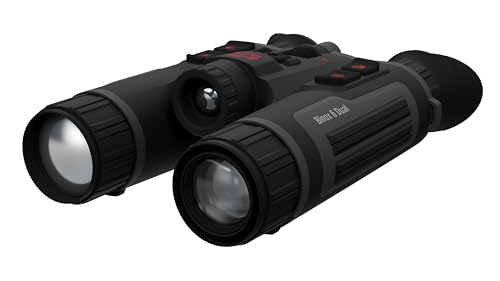
- Day, night, thermal, and twilight modes
- Built-in 1,000-yard laser rangefinder
- 4K day sensor with 256x192 thermal imaging
Best For: Wildlife observers and hunters who want one binocular for multiple viewing modes
Ultralight Thermal Viewer
FLIR Scout TKx Thermal Monocular

- Lightweight 0.37-pound body
- Detects heat in darkness or bright light
- Waterproof with up to 7-hour battery life
Best For: Wildlife viewers who want a rugged, lightweight thermal monocular for close-range spotting
Dual-Spectrum Field Binoculars

- Thermal and digital day/night viewing
- Built-in 1,000m laser rangefinder
- IP67 waterproof with GPS and Wi-Fi
Best For: Wildlife spotters and hunters who want dual-spectrum viewing with integrated ranging
ATN BlazeTrek Pick
Compact thermal monocular for wildlife scanning

- 384x288 sensor with <25mK NETD
- Up to 990m detection with 19mm lens
- Wi-Fi app control and photo/video recording
Best For: Portable wildlife scanning with recording and app control
Burris Hot Track Pick
Handheld thermal with hot track and phone control
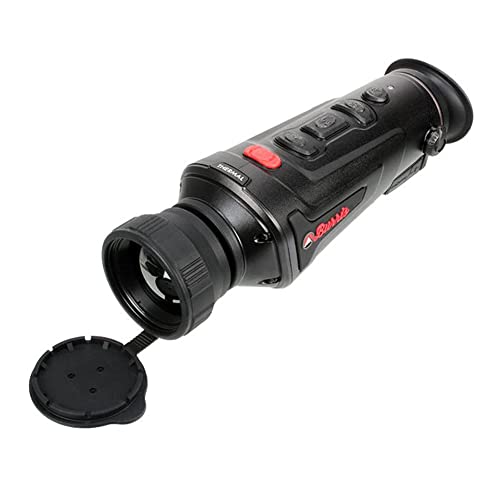
- Tracks targets over 750 yards away
- Wi-Fi mobile control and recording
- Five palettes with stadiametric ranging
Best For: Simple handheld use with tracking and mobile recording
AGM Rattler V2 Pick
Rugged thermal scope for fast target acquisition

- 2.5x base mag with wide field of view
- 11.5-hour runtime with two rechargeable batteries
- Shot-activated recording and IP67 protection
Best For: Rifle-mounted wildlife hunting with quick target acquisition
Advanced Clarity Pick
MiLESEEY TNV10PRO Thermal Monocular

- True 320×240 IR sensor with 50Hz refresh rate
- Hotspot Tracking and 4× digital zoom
- Up to 12 hours runtime with IP65 build
Best For: Wildlife watchers who want smoother thermal viewing and easy handheld use
Long-Range Sensor Pick
ATN BlazeTrek-619 Thermal Monocular

- 640×512 sensor with 50Hz refresh rate
- <25mK NETD for sensitive thermal detail
- Wi‑Fi app control plus photo and video recording
Best For: Users who want a high-resolution thermal monocular with phone connectivity
Premium Rangefinder Pick
AGM ReachIR LRF 50-640 Thermal Monocular

- 640×512 12μm sensor with <20mK sensitivity
- 1000m laser rangefinder built in
- WiFi and 64GB storage for saving footage
Best For: Wildlife observers who want thermal imaging with built-in laser rangefinding
Compact Thermal Monocular – TOPDON TS004 Pro Thermal Monocular
If you want a thermal night vision device for wildlife that balances portability with useful range, the TOPDON TS004 Pro is built for quick handheld scanning. Its 384×288 IR resolution, 50Hz refresh rate, and 19mm lens are aimed at showing heat signatures clearly through fog and dense vegetation, while the wireless app connection adds a convenient way to monitor and record in the field.
Best For: Hunters and wildlife observers who want a compact monocular with strong battery life and app connectivity.
Pros:
- 384×288 IR resolution with a smooth 50Hz refresh rate for clearer thermal detail
- Up to 11 hours of battery life from the included 5000mAh battery
- Wireless phone connection with image and video recording through the app
- IP67-rated, silicone-encased build designed for dust, water, and drops
Cons:
- Monocular design is less immersive than binocular-style viewing
- Detection range is practical for field use, but not the longest in this group
Overall, the TS004 Pro is a sensible choice if you value dependable thermal performance in a compact body. It is especially appealing for wildlife spotting when you want straightforward operation, long runtime, and weather-ready durability.
All-in-One Multispectral Binoculars – ATN Binox 6 Dual Multispectral Binoculars
For buyers comparing a thermal night vision device for wildlife, the ATN Binox 6 stands out because it combines day, night, thermal, and twilight viewing in one binocular. The 256×192 thermal sensor, built-in laser rangefinder, and 4K daytime optics make it a flexible option for scanning open ground, tracking heat signatures, and checking distances without carrying separate gear.
Best For: Wildlife observers and hunters who want one binocular for thermal, day, and night viewing.
Pros:
- Four viewing modes in one device: day, night, thermal, and twilight
- Built-in 1,000-yard laser rangefinder with ±1 m accuracy
- 4K day sensor plus 256×192 thermal sensor for versatile observation
- WiFi streaming, 64 GB storage, and tripod mount support
Cons:
- More complex than a simple monocular if you only need basic thermal viewing
- Higher-end feature set may be more than casual users require
This is a strong pick if you want a multi-purpose field instrument rather than a single-function thermal unit. The added rangefinder and dual-view setup make it especially useful when identification and distance checks matter as much as detection.
Ultralight Thermal Viewer – FLIR Scout TKx Thermal Monocular
FLIR Scout TKx - Compact Infrared/Thermal Imaging Monocular for Wildlife Viewing, Hunting & Outdoor
Check Price On AmazonThe FLIR Scout TKx is a compact thermal night vision device for wildlife viewing when portability matters most. It uses infrared/thermal imaging to reveal animals in darkness or bright light, and its lightweight body makes it easy to carry on longer outings where you want fast, simple detection rather than a larger binocular setup.
Best For: Wildlife viewers and outdoor users who want a lightweight, rugged thermal monocular for short-range spotting.
Pros:
- Very lightweight at 0.37 pounds for easy all-day carry
- Detects heat signatures in complete darkness or glaring light
- Waterproof, weather-tight design for wet conditions
- Up to 7 hours of battery life on the rechargeable battery
Cons:
- 90-meter detection range is shorter than higher-end thermal units
- Less advanced feature set than dual-sensor or rangefinder-equipped models
If your priority is a simple thermal viewer that slips easily into the field, the Scout TKx fits that role well. It is best suited to close-range wildlife observation where low weight and ruggedness matter more than advanced imaging extras.
Dual-Spectrum Field Binoculars – AGM ObservIR LRF Binoculars
If you are shopping for a thermal night vision device for wildlife and want more than simple heat detection, the AGM ObservIR LRF brings together thermal and digital day/night viewing in one rugged binocular. Its 256×192 thermal sensor, ultra-low-light CMOS channel, and built-in 1,000m laser rangefinder make it a capable tool for spotting, identifying, and measuring targets in difficult lighting.
Best For: Wildlife spotters and hunters who want dual-spectrum viewing plus integrated ranging.
Pros:
- Dual-spectrum imaging combines thermal and digital day/night vision
- Built-in laser rangefinder reaches up to 1,000m
- 4K ultra-low-light optical channel supports dusk and nighttime viewing
- IP67 waterproof build with Wi-Fi, GPS, and digital compass
Cons:
- More feature-rich and complex than a basic monocular
- Thermal resolution is 256×192, which is lower than some higher-resolution options
For users who need detection, identification, and distance data in one package, this AGM binocular is a very practical choice. It is especially compelling for longer sessions where navigation tools, storage, and external power support add real field value.
ATN BlazeTrek Pick – Compact thermal monocular for wildlife scanning
ATN BlazeTrek-319 Thermal Imaging Monocular 12 Micron, 384x288 <25 NETD, 50 Hz
Check Price On AmazonIf you want a thermal night vision device for wildlife that is easy to carry into the field, the ATN BlazeTrek-319 keeps the setup compact while still offering serious detection range. Its 384×288, 12µm sensor, <25mK NETD, and 19mm lens are geared toward spotting heat signatures clearly, and the 50 Hz refresh rate helps keep motion looking smooth during nighttime scanning.
Best For: Wildlife watchers and hunters who want a lightweight handheld thermal viewer with app connectivity and recording.
Pros:
- 384×288 thermal sensor with 12µm pixels and <25mK NETD for sensitive heat detection
- Up to 990m detection range with a 19mm lens
- Multiple color palettes, including White Hot, Black Hot, Iron Red, Sepia, and Green Hot
- Built-in photo/video recording plus Wi-Fi and smartphone app control
Cons:
- Handheld monocular format means it is not a mounted scope
- Battery life is listed as over 7 hours, which may still require planning for longer outings
Overall, this is a well-rounded choice if you need a portable thermal night vision device for wildlife observation and want modern features like mobile control and on-device recording. It balances range, sensitivity, and field-friendly design without adding unnecessary complexity.
Burris Hot Track Pick – Handheld thermal with hot track and phone control
Burris Thermal Series Handheld Thermal Vision Device for Night Hunting, 3.3-13.2x50mm
Check Price On AmazonThe Burris Thermal Series is a practical thermal night vision device for wildlife if you want a handheld unit built around simple operation and target tracking. It combines hot track capability, real-time Wi-Fi mobile connection, and five color palettes with adjustable contrast and brightness, making it easy to adapt to different nighttime conditions in the field.
Best For: Hunters and wildlife observers who want a straightforward handheld thermal with tracking and mobile control.
Pros:
- Hot track targets over 750 yards away
- Real-time Wi-Fi connection to control and record from a mobile phone
- Five color palettes plus stadiametric ranging
- IP66 waterproof and dustproof rating
Cons:
- Heavier at 3 pounds than a compact monocular
- Rated IP66 rather than IP67
This model makes sense if you care more about practical tracking and easy operation than ultra-compact size. For wildlife use, its long-range hot tracking and phone connectivity are the standout advantages.
AGM Rattler V2 Pick – Rugged thermal scope for fast target acquisition
If you need a thermal night vision device for wildlife that mounts directly to a rifle, the AGM Global Vision Rattler V2 is built for fast targeting and field durability. The 19-256 model offers a 2.5x base magnification, wide field of view, 8x digital zoom, and a stadiametric rangefinder, which makes it useful for close- to mid-range scanning and quicker shot setup.
Best For: Rifle hunters who want a rugged thermal scope with recording and fast target acquisition.
Pros:
- 2.5x base magnification with a wide field of view for quick scanning
- Up to 11.5 hours of runtime on a single charge with two rechargeable batteries included
- 10 reticle styles, 4 color options, 8x digital zoom, and stadiametric rangefinder
- Shot-activated recording with onboard audio and IP67 waterproofing
Cons:
- Designed for rifles, so it is not a handheld wildlife viewer
- 19-256 resolution is lower than some higher-end thermal imaging options
For mounted use, this is the most hunting-focused option in the group and a strong fit when speed, durability, and capture features matter. It is especially appealing for wildlife control or predator hunting where fast target acquisition is important.
Advanced Clarity Pick – MiLESEEY TNV10PRO Thermal Monocular
If you want a thermal night vision device for wildlife that balances sharper imaging with straightforward field use, the MiLESEEY TNV10PRO is built around a true 320×240 IR sensor, a 50Hz refresh rate, and an 800×600 OLED display. Its hotter-target tracking and multiple palettes make it easier to separate animals from brush, water, and other low-contrast scenes while scanning at night or in dim daylight.
Best For: Wildlife watchers who want smoother thermal viewing, long battery life, and simple one-handed operation.
Pros:
- True 320×240 IR sensor and 50Hz refresh rate for smoother, clearer thermal viewing
- Hotspot Tracking plus 4× digital zoom helps with fast target detection
- Five viewing palettes, including White Hot, Black Hot, and Jungle
- 4500mAh battery delivers up to 12 hours of runtime with IP65 protection
Cons:
- No built-in Wi-Fi or smartphone app connectivity listed
- Digital zoom is limited to 4×
- Best viewed as a handheld monocular rather than a long-range survey tool
Overall, the TNV10PRO is a practical pick if you value smoother thermal imagery, good battery endurance, and simple operation in the field. The included video recording and 32GB storage add convenience for documenting wildlife sightings without extra accessories.
Long-Range Sensor Pick – ATN BlazeTrek-619 Thermal Monocular
The ATN BlazeTrek-619 is a strong thermal night vision device for wildlife if you want higher native resolution, fast refresh, and app-based convenience. Its 640×512 thermal sensor, <25mK NETD rating, and 19mm lens are aimed at clearer detection in changing outdoor conditions, while built-in Wi‑Fi makes it easier to save or share photos and video from the field.
Best For: Users who want a higher-resolution thermal monocular with phone connectivity and recording features.
Pros:
- 640×512 thermal sensor with 50Hz refresh rate
- <25mK NETD rating for strong sensitivity to temperature differences
- Built-in Wi‑Fi and app connectivity for remote control and media capture
- Video and photo recording with up to 256GB microSD support
Cons:
- Higher magnification range may not suit every close-range scanning need
- Uses a microSD card for storage rather than built-in memory
- No laser rangefinder included in the listed features
For wildlife observation, the BlazeTrek-619 stands out when resolution and connectivity matter more than simplicity. It offers a capable mix of thermal sensitivity, recording options, and app control for users who like to document what they see.
Premium Rangefinder Pick – AGM ReachIR LRF 50-640 Thermal Monocular
For a thermal night vision device for wildlife that adds ranging capability, the AGM ReachIR LRF 50-640 combines a 640×512 12μm sensor with a 50mm lens and a 1000m laser rangefinder. That makes it useful when you need both thermal detection and distance awareness, and the WiFi plus 64GB storage help capture observations for later review.
Best For: Wildlife observers who want thermal imaging with built-in laser rangefinding and generous onboard storage.
Pros:
- 640×512 12μm sensor with <20mK thermal sensitivity
- 50mm lens and 1000m laser rangefinder for distance measurement
- WiFi connectivity and 64GB storage for saving observations
- Compact, lightweight build with waterproof and fogproof design
Cons:
- Manual focus may take more adjustment than auto-focus models
- Larger 50mm lens may be less compact than smaller monoculars
- Advanced feature set may be more than casual users need
Among the three, this is the most feature-rich option for users who want more than just heat detection. The rangefinder and high-capacity storage make it especially appealing for more deliberate wildlife scouting and documentation.
How We Picked the Best Thermal Night Vision Device for Wildlife
For a Thermal Night Vision Device for Wildlife, we prioritized image quality, thermal sensor performance, detection range, refresh rate, ergonomic portability, and weather resistance. We also looked for features that make field use easier, such as wireless connectivity, built-in rangefinders, and intuitive controls.
Because wildlife observation often happens in low-light, changing terrain, we favored devices that balance clarity with usable magnification and a field of view that still makes scanning efficient.
Quick Comparison
If you want the simplest setup, handheld thermal monoculars are usually the easiest to carry and scan with. If you need more detail at distance, higher-resolution options and larger lenses are the better fit. Binocular-style multispectral models can be ideal when you want both thermal detection and a more natural viewing experience, while thermal scopes are best when the primary use is mounted observation or night hunting applications.
Key Buying Factors for a Thermal Night Vision Device for Wildlife
Sensor Resolution and Thermal Sensitivity
Higher resolution generally produces sharper outlines and better target separation. Sensitivity, often shown as NETD, matters just as much because lower numbers usually mean better performance in mild temperature contrast, humidity, and cluttered backgrounds.
Lens Size, Range, and Field of View
A longer lens can help spot animals at greater distances, but it narrows the field of view. Shorter lenses are easier for scanning forests, fields, and brushy edges. Match the optic to your typical habitat rather than choosing maximum magnification by default.
Refresh Rate and Image Usability
A smoother refresh rate makes it easier to follow moving animals and pan across the landscape without choppy motion. This matters a lot when you are watching fast-moving wildlife or searching for heat signatures on uneven terrain.
Comfort, Durability, and Power
Look for a housing that feels secure in the hand, with weather sealing for wet or dusty conditions. Battery life and charging options are also important if you spend long nights outside.
Who Should Buy Which Thermal Night Vision Device for Wildlife?
Casual wildlife watchers usually do best with compact handheld monoculars that are simple to carry and operate. Serious observers who want more detail and distance should look at higher-resolution thermal monoculars or binoculars with rangefinding support. If you need a mounted optic for a rifle platform or dedicated night-use setup, a thermal scope may be the more practical choice.
In short, the best Thermal Night Vision Device for Wildlife is the one that fits your viewing distance, terrain, and comfort level. Focus on image quality first, then choose the features that make field use easier for your specific outings.