If you want to spot wildlife, track heat signatures, or scan dark terrain without hauling bulky gear, a compact thermal imager can make a big difference.
Below, we focus on practical, field-ready options for nature observation, from smartphone add-ons to dedicated handheld monoculars.
Best 10 Compact Thermal Imager for Nature Observation Picks for 2026
Wildlife Scanning Pick
C2 Thermal Imaging Monocular, 256x192 HD

- 256x192 thermal sensor with NETD <35mK
- Wide 17.5° x 13.1° field of view
- Records video with audio and supports WiFi hotspot
Best For: Wildlife watchers who want a portable thermal monocular for scanning and tracking
Pocket-Sized Simple Pick
Mini Thermal Camera with Touchscreen

- Weighs only 1.4 oz and fits in a pocket
- 80x60 IR sensor with real-time temperature viewing
- Touchscreen use with no app or WiFi needed
Best For: Campers and beginners who want a tiny, simple thermal camera for quick checks
Premium Mid-Range Pick
Pulsar Axion Compact Thermal Monocular

- 384x288 sensor for sharper mid-range detection
- <18mK sensitivity helps in fog and humidity
- 640x400 AMOLED display with 1.5–6x digital zoom
Best For: Serious outdoor users who want a premium compact monocular for mid-range spotting
Phone Accessory Pick

- Plugs into iPhone 15+ via USB-C
- Upscales 80x60 native IR to 240x180
- MSX and app-based inspection guides
Best For: iPhone 15+ users who want a pocketable thermal add-on for mixed-use scanning
Rugged thermal monocular
Compact Thermal Imager for Day-and-Night Wildlife Spotting

- Detects heat in darkness or bright light
- Up to 90-meter detection range
- Waterproof body with up to 7 hours battery life
Best For: Outdoor users who want a rugged handheld thermal viewer for wildlife spotting
Phone-connected thermal camera
Pocket Thermal Imager for Phone-Based Nature Observation

- Uses your phone for display and control
- Dual-lens system with 512 x 384 enhanced resolution
- App includes photo, video, graphs, and color palettes
Best For: Users who want a compact phone-based thermal camera for outdoor observation and analysis
Portable thermal monocular
Portable Thermal Imager for Camping and Night Observation

- 256 x 192 thermal sensor with 4X zoom
- IP65 weather resistance and 6+ hours battery life
- App sharing plus 16GB image storage
Best For: Campers and outdoor groups who want a durable handheld thermal monocular
Lightweight handheld pick
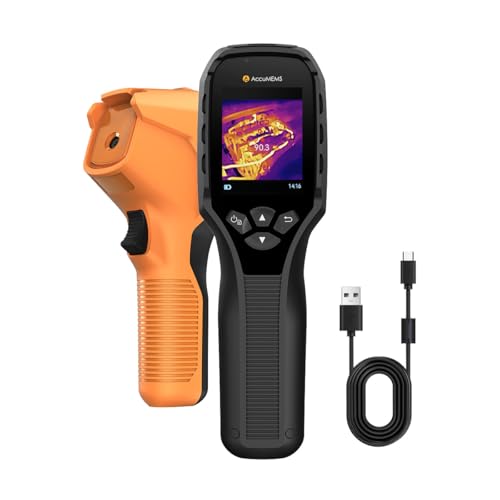
- 240g compact body for easy carry
- 25Hz thermal display with full-screen viewing
- Up to 14 hours of runtime
Best For: Mobile users needing a lightweight thermal imager for quick field observation
Rugged monocular pick

- 256x192 IR resolution with 50Hz refresh
- Wireless app support for live viewing and capture
- IP67 housing with up to 11 hours of battery life
Best For: Wildlife watchers wanting a rugged thermal monocular for outdoor use
Phone-accessory option

- Only 45 grams and easy to pack
- 256x192 IR resolution with adjustable 9mm lens
- Runs from your phone with 4-7 hour estimated runtime
Best For: Android users wanting a compact thermal add-on for wildlife tracking
Wildlife Scanning Pick – C2 Thermal Imaging Monocular, 256×192 HD
If you want a compact thermal imager for nature observation, this handheld monocular is built for scanning wildlife in darkness, fog, and thick brush. Its 256×192 thermal sensor, 10mm lens, and 17.5° x 13.1° field of view make it better suited to quickly picking up heat signatures across open ground than to close-up inspection work.
Best For: Wildlife watchers and hunters who want a portable thermal monocular with wide-area scanning, recording, and app connectivity.
Pros:
- 256×192 VOx thermal sensor with NETD <35mK for clearer heat signatures
- Wide 17.5° x 13.1° field of view helps with rapid target acquisition
- 800×600 OLED display with 50 Hz refresh and 4 color palettes
- Built-in 8GB storage, video recording with audio, WiFi hotspot, and up to 8 hours runtime
Cons:
- Heavier and larger than pocket-sized thermal cameras
- Best used for scanning and tracking rather than detailed close-range imaging
Overall, this model makes sense if you need a nature-ready thermal viewer with broader scanning coverage and useful field features. It balances image quality, portability, and recording tools well for outdoor observation.
Pocket-Sized Simple Pick – Mini Thermal Camera with Touchscreen
This compact thermal imager for nature observation is a pocket-sized tool that can also be used for checking animals while camping or scanning temperature changes outdoors. With an 80×60 IR sensor, touchscreen controls, and no-app operation, it is designed for quick, simple thermal viewing rather than long-range wildlife spotting.
Best For: Campers, travelers, and beginners who want a tiny thermal camera for basic outdoor checks and quick temperature scanning.
Pros:
- Extremely small and lightweight at 1.4 oz
- Touchscreen design with no app, WiFi, or setup required
- 80×60 IR sensor shows temperature differences in real time
- Can be used for camping, room checks, and general inspection tasks
Cons:
- Lower-resolution sensor than larger thermal monoculars
- Not built for extended wildlife observation ranges
If portability matters most, this is the easiest device in the group to carry anywhere. It is a practical choice for casual nature checks and general-purpose thermal scanning, especially for users who want something simple and pocketable.
Premium Mid-Range Pick – Pulsar Axion Compact Thermal Monocular
For buyers who want a compact thermal imager for nature observation with stronger sensor performance, the Pulsar Axion Compact is positioned for mid-range scanning in brush, fog, and low-contrast conditions. Its 384×288 thermal sensor, <18mK sensitivity, and 640x400 AMOLED display make it a serious option for spotting wildlife heat signatures more cleanly.
Best For: Serious outdoor users who want a premium compact monocular for mid-range wildlife spotting and fine thermal detail.
Pros:
- 384×288 thermal sensor for sharper mid-range heat detection
- <18mK thermal sensitivity helps in rain, humidity, and fog
- 640×400 AMOLED display offers strong contrast and smooth visuals
- 19mm f/1.0 lens with 1.5–6x digital zoom adds field versatility
Cons:
- Uses digital zoom rather than a longer optical zoom system
- Premium capability comes in a more specialized, higher-end package
This is the strongest choice here if your priority is better thermal detail and reliable performance in difficult outdoor conditions. It is compact, but it is also clearly aimed at users who want more capability than a basic pocket imager.
Phone Accessory Pick – FLIR One for iPhone 15+
If you want a compact thermal imager for nature observation without carrying a standalone monocular, this FLIR One plugs into an iPhone 15 or newer over USB-C. It is built around 80×60 native IR with 240×180 super resolution and FLIR MSX, so it is better for general thermal viewing and inspection-style checks than for dedicated long-range wildlife work.
Best For: iPhone 15+ users who want a pocketable thermal add-on for casual outdoor checks and mixed inspection tasks.
Pros:
- Very compact smartphone accessory form factor
- 240×180 super resolution improves detail over 80×60 native IR
- MSX merges thermal and visual images for added clarity
- Includes inspection guides inside the app for guided use
Cons:
- Requires an iPhone 15 or newer with USB-C
- Native 80×60 sensor is less suited to dedicated wildlife viewing than higher-end monoculars
This is the most travel-friendly option if your phone is already part of your kit. It works well when you want a quick thermal look without adding a separate device, but it is more of a versatile thermal accessory than a purpose-built nature observation monocular.
Rugged thermal monocular – Compact Thermal Imager for Day-and-Night Wildlife Spotting
FLIR Scout TKx - Compact Infrared/Thermal Imaging Monocular for Wildlife Viewing, Hunting & Outdoor
Check Price On AmazonIf you want a compact thermal imager for nature observation, the FLIR Scout TKx is built for quick heat detection in low light and full darkness. Its thermal view can help you spot animals or other heat signatures at up to 90 meters, and the rugged waterproof body makes it easier to carry into wet outdoor conditions.
Best For: Birders, wildlife watchers, and hunters who want a simple handheld thermal monocular for fast spotting.
Pros:
- Detects heat signatures in complete darkness or bright conditions
- Up to 90-meter detection range for human-sized subjects
- Weather-tight, waterproof design rated to IM-67 submersible standards
- Up to 7 hours of continuous use on the rechargeable Li-Ion battery
Cons:
- Detection-focused thermal view, not a high-detail optical camera
- Manual focus means you will adjust it yourself in the field
Overall, the Scout TKx is a practical pick if your priority is dependable thermal detection rather than lots of advanced imaging features. It keeps things compact, rugged, and straightforward for outdoor observation.
Phone-connected thermal camera – Pocket Thermal Imager for Phone-Based Nature Observation
The TOPDON TC001 Max is a compact thermal imager for nature observation if you prefer using your phone as the display and control hub. Its dual-lens design combines infrared thermal imaging with visible-light input, while the portable USB-C form factor makes it easy to carry for field use.
Best For: Hikers, campers, and wildlife observers who want a phone-connected thermal camera with detailed app tools.
Pros:
- Dual-lens setup helps produce sharper outlines and clearer detail
- Patented TISR boosts thermal resolution up to 512 x 384
- Plug-and-play USB-C connection works with compatible iPhone, iPad, Android, and Windows devices
- App features include photo, video, temperature graphs, 3D analysis, and multiple color palettes
Cons:
- Requires a connected device to operate
- Best suited to users comfortable with app-based imaging tools
For anyone who wants a pocketable thermal camera with strong app support, the TC001 Max offers a flexible way to inspect heat patterns outdoors. It is especially appealing if you want to capture and analyze what you see instead of just viewing it live.
Portable thermal monocular – Portable Thermal Imager for Camping and Night Observation
The GOYOJO G210 is a compact thermal imager for nature observation that emphasizes portability, shared viewing, and outdoor durability. Its 256 x 192 thermal sensor, 4X zoom, and 25Hz refresh rate make it a practical choice when you want to scan trails, campsites, or wildlife at night.
Best For: Campers, hunters, and outdoor groups that want a lightweight thermal monocular with app sharing.
Pros:
- 256 x 192 thermal sensor with 12 μm infrared detector
- Six color palettes and 4X zoom for flexible viewing
- 16GB image storage plus app-based real-time image sharing
- Weather-resistant build with IP65 protection and over 6 hours of use
Cons:
- Fixed focus limits manual adjustment
- Image resolution is lower than higher-end thermal cameras
As a field-ready thermal monocular, the G210 balances useful outdoor features with a simple handheld design. It is a good fit if you value group sharing, battery life, and ruggedness more than maximum image resolution.
Lightweight handheld pick – GT14S Portable Thermal Imager
If you want a compact thermal imager for nature observation that stays easy to carry in the field, the GT14S is built around portability and fast viewing. Its 240g body, 50° wide field of view, and 25Hz thermal display make it practical for scanning moving wildlife or checking warm objects without a bulky setup.
Best For: Users who want a lightweight handheld thermal imager for mobile observation, quick temperature checks, and all-day carry.
Pros:
- 240g compact design with a non-slip grip for comfortable handheld use
- 25Hz image frequency and full-screen thermal imaging for smoother tracking of moving targets
- 50° wide field of view supports faster scanning of larger areas
- Up to 14 hours of battery life helps it last through long outings
Cons:
- Lower-resolution details are not specified in the provided notes
- Designed as a handheld imager rather than a dedicated monocular
Overall, the GT14S is a practical pick if your priority is a lightweight thermal tool with long runtime and simple controls. It focuses more on easy field use and temperature checking than on specialized wildlife-optics features.
Rugged monocular pick – TOPDON TS004 Monocular
The TOPDON TS004 is a strong option if you want a compact thermal imager for nature observation with a true monocular form factor. Its 256×192 IR resolution, 50Hz refresh rate, and 13mm lens are aimed at clearer thermal viewing while scanning wildlife, trails, or distant movement in changing outdoor conditions.
Best For: Outdoor users who want a rugged thermal monocular with long battery life and wireless phone viewing.
Pros:
- 256×192 IR resolution with a smooth 50Hz refresh rate for detailed thermal images
- 13mm lens supports detection up to 410 meters and visibility within 100 YD
- Wireless connection to the TopInfrared app for live monitoring, photos, and video capture
- IP67 waterproof rating and silicone housing add durability for outdoor use
Cons:
- Heavier than the TS001 at 70 grams
- Detection range is excellent, but close-detail use is limited to the specs provided
In practice, the TS004 is best suited to users who want a durable, ready-to-carry monocular rather than a phone accessory. The combination of battery life, wireless viewing, and rugged construction makes it especially appealing for field observation.
Phone-accessory option – TOPDON TS001 Android Camera
If you want a compact thermal imager for nature observation without adding another full-size device, the TOPDON TS001 turns an Android phone or tablet into a thermal viewing tool. Its 256×192 IR resolution, adjustable 9mm lens, and dual-light imaging modes make it flexible for outdoor tracking, forestry, and other distance-based viewing tasks.
Best For: Android users who want a lightweight thermal imaging accessory for wildlife tracking and mobile field use.
Pros:
- Very light at 45 grams, making it easy to pack and carry
- 256×192 IR resolution with 25Hz frame rate for clear thermal imaging
- Adjustable 9mm lens supports a wide range from close work to 500 meters
- Uses smartphone power, with an estimated 4-7 hour runtime on a 3000-5000mAh device
Cons:
- Not compatible with iOS devices
- No built-in battery, so it depends on your phone or tablet
- Field use is tied to carrying and managing a compatible mobile device
The TS001 stands out if you already use Android and want a small, adaptable thermal accessory instead of a dedicated handheld unit. It combines portability with useful imaging modes and temperature tools, making it a versatile choice for observation and general outdoor use.
How We Picked the Best Compact Thermal Imager for Nature Observation
For a Compact Thermal Imager for Nature Observation, we prioritized portability, image clarity, refresh rate, battery life, and ease of use in real outdoor conditions. We also looked at whether each model is simple to carry, quick to deploy, and useful for observing animals without unnecessary complexity.
Quick Comparison
Smartphone-compatible models are the most flexible if you want a lightweight setup and already carry a phone into the field. Dedicated monoculars are usually better for grab-and-go viewing, one-handed operation, and more comfortable scanning over longer periods. Higher resolution and better refresh rates help when you need cleaner detail on moving animals, while compact size and weight matter most on long walks or overnight outings.
Key Buying Factors for a Compact Thermal Imager for Nature Observation
Resolution and Image Quality
Higher native resolution generally improves the ability to separate animals from branches, brush, or rocks. For distant observation, this matters more than flashy software extras. Super-resolution can help, but native sensor quality is still the baseline that counts.
Lens, Field of View, and Zoom
A wider field of view is useful for scanning open areas and tracking movement, while a tighter view can help you inspect a specific target. Optical design and focal length affect how easy it is to locate wildlife quickly and follow it smoothly.
Refresh Rate and Tracking
A smoother image is easier on the eyes and better for moving subjects. Higher refresh rates are especially helpful when observing birds in flight, mammals at dusk, or animals moving through brush.
Portability and Power
Compact body size, reliable battery life, and simple controls matter on the trail. If you hike often, choose a model that is easy to carry, fast to wake up, and comfortable to use one-handed.
Smartphone Vs. Standalone
Phone-connected thermal cameras can be very compact and convenient, but they depend on your device and may be less intuitive in cold or wet conditions. Standalone monoculars are usually better if you want a purpose-built tool for field observation.
Who Should Buy Which Compact Thermal Imager for Nature Observation?
If you want the lightest possible setup and already use your phone in the field, a smartphone-compatible model makes sense. If you care most about simple, dedicated wildlife viewing, choose a standalone monocular. If you need longer observation sessions, faster scanning, or more comfortable handling, look for models with stronger ergonomics, better refresh rates, and clearer native resolution. For buyers focused on the best all-around Compact Thermal Imager for Nature Observation, the right choice is usually the one that balances image quality with portability and easy field use.