Choosing the right power inverter for boat use is mostly about matching your power needs to your battery system and the devices you plan to run. From phones and cameras to laptops and small appliances, the best pick depends on wattage, waveform, and outlet options.
Below, we’ve narrowed the field to ten practical options that balance portability, output, and value so you can power onboard essentials with less guesswork.
Best 10 Power Inverter for Boat Picks for 2026
Compact Travel Pick
BESTEK 300W 12V Power Inverter
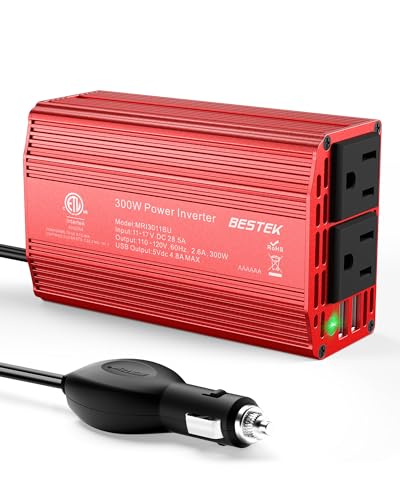
- 300W continuous, 700W peak
- 2 AC outlets and 2 USB ports
- Compact build with safety protections
Best For: Light onboard charging for phones, tablets, and laptops
High-Power Pure Sine Choice
BELTTT 1000W Pure Sine Inverter

- 1000W continuous, 2000W peak
- Pure sine wave for sensitive loads
- LCD screen plus dual AC outlets
Best For: Higher-demand boat setups that need cleaner AC power
Budget Dual-Use Option
YSOLX 500W Vehicle Power Inverter

- 500W rated output with 2 AC sockets
- Plug-in or battery-clip connection modes
- Built-in overload and short-circuit protection
Best For: Affordable light-duty power and occasional emergency backup
Feature-Rich Multi-Port Pick

- 3 AC outlets plus USB and Type-C
- LCD display for voltage and battery status
- Quiet cooling with 6-way protection
Best For: Running several devices on board with lots of port options
Pure Sine Capacity Pick
BELTTT 1500W Pure Sine Wave Inverter 12V to 110V Converter

- 1500W continuous, 3000W surge
- Pure sine wave for sensitive loads
- LCD display with dual AC outlets and USB
Best For: Boat owners needing cleaner power for sensitive electronics
Compact Charge-and-Go Pick
Pro Chaser 400W Power Inverter for Vehicles
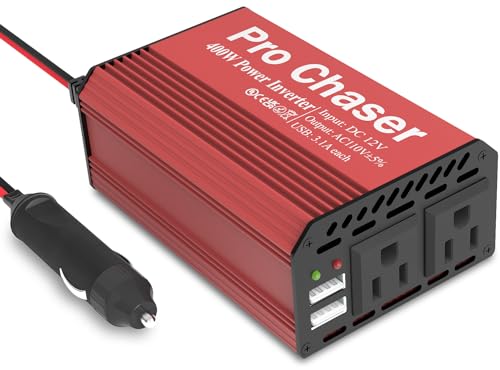
- 400W continuous, 800W peak
- Dual AC outlets and two USB ports
- Compact, lightweight, and protected
Best For: Boat users needing a small inverter for phones, tablets, and light devices
Flexible Mid-Range Pick
500W Peak 1000W Power Inverter for Vehicles
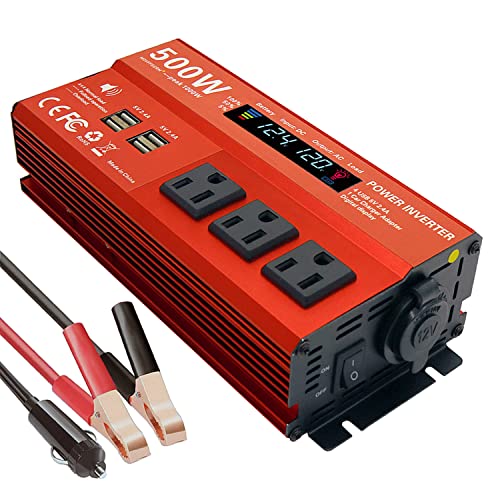
- 500W continuous, 1000W peak
- Three AC outlets and four USB ports
- Battery clips or cigarette lighter input
Best For: Boaters wanting flexible charging for modest electronics and accessories
Compact 400W Pick for Everyday Gear
400W Car Power Inverter with USB-C and Dual AC

- 400W continuous power, 800W peak
- Dual AC outlets plus USB-C and USB-A charging
- Cooling fan and AC switch for easier control
Best For: Small electronics and light onboard charging
High-Capacity 1000W Option
1000W Power Inverter with LCD Display

- 1000W continuous power, 2000W peak
- LCD display helps monitor voltage and battery status
- Dual AC outlets with 36W USB-C charging
Best For: Higher-load electronics and multi-device setups
Portable 400W Runner-Up
Pro Chaser 400W Power Inverter with PD65

- 400W continuous power, 800W peak
- 65W USB-C PD plus 18W USB-A charging
- Compact body with 30-inch cord
Best For: Portable charging with fast USB-C support
Compact Travel Pick – BESTEK 300W 12V Power Inverter
If you need a compact power inverter for boat trips with light loads, this BESTEK unit is a practical 12V option for charging everyday electronics. It offers 300W continuous power, dual AC outlets, and dual USB ports, so it works well for phones, tablets, laptops, and other small devices when you just need basic onboard AC power.
Best For: Boaters who want a small, easy-to-carry inverter for phones, tablets, laptops, and other low-demand devices.
Pros:
- 300W continuous output with 700W peak surge capacity
- 2 AC outlets plus 2 USB fast-charging ports
- Ultra-compact design with a long cigarette-lighter plug cable
- Built-in protections plus silent smart cooling fan
Cons:
- Modified sine wave output, so it is not the best fit for sensitive inductive loads
- Limited to lighter power needs compared with larger marine inverters
- Designed for 12V input, so it depends on a suitable DC source
Overall, this is a convenient grab-and-go inverter for boat owners who want portable charging without a bulky setup. Its strength is simplicity and portability, not heavy-duty appliance power.
High-Power Pure Sine Choice – BELTTT 1000W Pure Sine Inverter
For buyers looking for a more capable power inverter for boat use, this BELTTT model stands out with 1000W continuous output and pure sine wave power. That makes it a stronger fit for running sensitive electronics and other gear that benefits from cleaner AC power, especially when you want a more versatile setup on the water.
Best For: Boaters who need higher output and pure sine wave power for sensitive devices and longer-running accessories.
Pros:
- 1000W continuous power with 2000W peak surge
- Pure sine wave output is suitable for sensitive loads
- LCD display shows input/output voltage, battery, and load status
- Includes dual AC outlets, USB port, and safety protections
Cons:
- Larger and heavier than compact plug-in inverters
- Requires battery connection and installation-oriented setup
- One AC voltage option may require checking compatibility with your equipment
If you want a boat inverter that can handle more demanding use cases, this one is a strong step up from small plug-in models. The pure sine wave output and LCD monitoring make it a practical choice for more serious onboard power needs.
Budget Dual-Use Option – YSOLX 500W Vehicle Power Inverter
This power inverter for boat use is a budget-friendly option for light-duty charging and emergency backup tasks. It converts 12V DC to 110V AC, includes two AC sockets and two USB ports, and supports two connection modes so you can choose a cigarette lighter plug for smaller loads or battery clips for higher-demand use.
Best For: Budget-minded boaters who need a simple inverter for small devices and occasional emergency power.
Pros:
- 500W rated output with 2 AC sockets and 2 USB ports
- Dual connection method for plug-in or battery-clip use
- Built-in chip and fuse protections against common electrical issues
- Compact enough for travel, camping, and roadside backup
Cons:
- Car cigarette-lighter use is recommended only for loads under 150W
- Modified sine wave output may not suit every device
- No warranty information is listed in the supplied details
In practical terms, this is the kind of inverter that works best when you keep expectations modest. It is useful for phones, tablets, and small electronics, but it is not the right choice for heavier boat appliances.
Feature-Rich Multi-Port Pick – POWERFUEL 1200W Peak Inverter
If you want a power inverter for boat trips with plenty of charging options, this POWERFUEL unit is built around convenience. It offers 3 AC outlets, a Type-C port, and 3 USB ports, along with an LCD status monitor and quiet cooling system, making it a flexible choice for keeping multiple devices powered at once.
Best For: Boaters who want multiple outlet types and a straightforward way to power several devices at the same time.
Pros:
- 3 AC outlets, 1 Type-C port, and 3 USB ports
- LCD screen shows input voltage, output voltage, and battery level
- Quiet fan design that only activates when needed
- Built-in safety protections including reverse polarity protection
Cons:
- Modified sine wave output, not pure sine wave
- Peak power is 1200W, while listed continuous wattage is lower
- Designed for battery-powered use, so it depends on your onboard power source
This is a good fit if your priority is flexibility rather than maximum output quality. The extra ports and monitoring features make it easy to manage everyday electronics on board, especially during travel or emergency use.
Pure Sine Capacity Pick – BELTTT 1500W Pure Sine Wave Inverter 12V to 110V Converter
If you need a dependable power inverter for boat trips, the BELTTT 1500W model is built for running electronics that prefer clean power. Its pure sine wave output is designed to match utility-style AC, which helps reduce wear on sensitive equipment while delivering steady 12V DC to 110V/120V AC conversion for off-grid use.
Best For: Boat owners who want higher-capacity, pure sine wave power for sensitive electronics and mixed onboard charging needs.
Pros:
- Pure sine wave output is suitable for sensitive and inductive/capacitive loads.
- 1500W continuous power with 3000W peak surge handles startup loads better than smaller units.
- Dual AC outlets plus a 5V 2.1A USB port add flexibility.
- Smart LCD display shows input/output voltage, battery, and load status.
Cons:
- At 5.3 pounds, it is less portable than compact travel inverters.
- Designed for battery/DC setup, so installation is more involved than plug-in units.
For boats that need more than basic phone charging, this inverter stands out for clean output, useful monitoring, and stronger surge handling. It makes sense when you want a more serious onboard AC solution and have the battery setup to support it.
Compact Charge-and-Go Pick – Pro Chaser 400W Power Inverter for Vehicles
For light-duty onboard charging, this power inverter for boat use is a compact way to keep small devices running from a 12V source. The Pro Chaser 400W unit delivers modified sine wave AC power with dual outlets and USB ports, making it a simple option for phones, tablets, and small accessories.
Best For: Boaters who want a small, easy-to-carry inverter for basic charging and low-wattage devices.
Pros:
- 400W continuous output with 800W peak for small electronics.
- Dual AC sockets plus two high-speed USB ports support multiple devices.
- Very compact and lightweight at 14.08 ounces.
- Built-in protection and a cooling fan add everyday usability.
Cons:
- Modified sine wave output is less ideal for sensitive gear than pure sine wave models.
- Best suited to lower-wattage devices, not heavy onboard appliances.
This is a practical pick if you mainly need portable AC and USB power on the water without adding bulk. It is strongest as a convenience inverter rather than a high-demand marine power solution.
Flexible Mid-Range Pick – 500W Peak 1000W Power Inverter for Vehicles
If you want a versatile power inverter for boat outings, this 500W unit offers a useful mix of AC outlets, USB charging, and two connection methods. It runs from a cigarette lighter plug or directly from a 12V battery, which gives you flexibility as long as you stay within the unit’s stated limits.
Best For: Boaters who want an affordable, flexible inverter for charging devices and powering modest electronics.
Pros:
- 500W continuous output with 1000W peak provides more headroom than smaller portable units.
- Three AC outlets, four USB ports, and a cigarette lighter port cover a wide range of devices.
- Can connect through the cigarette lighter plug or battery clips.
- Modified sine wave design includes overheating, voltage, short-circuit, and overload protection.
Cons:
- Cigarette lighter input is limited to about 150W, so higher loads require battery clip connection.
- Modified sine wave output is less suitable for sensitive electronics than pure sine wave models.
This model is a strong middle-ground choice when you want more ports and more flexibility than a basic inverter. It fits well for everyday boating tasks where convenience matters more than premium power quality.
Compact 400W Pick for Everyday Gear – 400W Car Power Inverter with USB-C and Dual AC
If you need a power inverter for boat trips with basic electronics, this 400W unit is a practical fit for charging phones, tablets, cameras, laptops, and other small devices. It offers dual AC outlets plus multiple USB options, so it works well when you want a simple onboard power source for light-duty use.
Best For: Charging small electronics, travel gear, and other low-to-moderate power devices on 12V systems.
Pros:
- 400W continuous power with 800W peak for small appliances and electronics
- Two AC outlets plus 30W PD USB-C, 15W USB-C, and two USB-A ports
- Dedicated AC switch makes it easy to turn outlets on and off
- Temperature-controlled fan helps manage heat during longer use
Cons:
- Modified sine wave output may not suit every sensitive device
- 400W capacity is better for lighter loads than larger onboard equipment
- Designed for 12V systems, so it is not a high-power marine solution
Overall, this is a straightforward compact inverter for boat owners who want dependable charging without moving into higher-capacity hardware. It is strongest as a multi-device charging hub for everyday electronics and light accessories.
High-Capacity 1000W Option – 1000W Power Inverter with LCD Display
For a power inverter for boat setups that need more headroom, this 1000W model is built to handle larger electronics and multiple devices at once. It converts 12V DC to household AC power and adds an LCD display, making it easier to monitor voltage and battery status while you use it.
Best For: Larger 12V-powered setups that need more output for laptops, TVs, routers, and similar electronics.
Pros:
- 1000W continuous output with 2000W peak surge capacity
- LCD screen shows input voltage, output voltage, and battery status
- Two AC outlets plus 36W USB-C and a USB port for multiple devices
- Built-in protection features and temperature-controlled cooling fan
Cons:
- Cigarette lighter use is limited to 150W, so higher loads need direct battery clips
- Modified sine wave design is not recommended for some sensitive or high-demand appliances
- Not suited for refrigerators, microwaves, air conditioners, or laser printers
This is the strongest pick here if you want more usable output and better monitoring on board. It makes sense for buyers who need a flexible inverter for travel use but still want to stay within the limits of a modified sine wave design.
Portable 400W Runner-Up – Pro Chaser 400W Power Inverter with PD65
This power inverter for boat use is a compact choice when you want fast charging in a small footprint. With 400W continuous output, dual AC outlets, and a 65W USB-C PD port, it is set up for travelers who need quick access to power for everyday devices and occasional small appliances.
Best For: Compact charging and light appliance use where portability matters most.
Pros:
- 400W continuous power and 800W peak output
- USB-C PD 65W port plus USB-A QC 18W for faster device charging
- Cellphone-sized body with a 30-inch cord for flexible placement
- Built-in fuse and automatic fan protection for safer operation
Cons:
- Best with one high-power device at a time
- Using PD65W with AC at the same time may exceed the vehicle socket limit
- Modified sine wave output may not be ideal for all electronics
For buyers who want a small, easy-to-carry inverter and value fast USB-C charging, this is a well-balanced option. It is less about raw wattage and more about convenience, portability, and practical everyday power.
How We Picked the Best Power Inverter for Boat
For boat use, we focused on output capacity, waveform type, charging versatility, and how well each inverter fits real-world onboard use. We also considered whether a model is better suited to light electronics or to heavier loads that demand more stable power.
Because marine setups can vary widely, we prioritized options that cover both simple weekend trips and more demanding off-grid needs.
Quick Comparison
Compact 300W and 400W models are best for low-draw electronics such as phones, tablets, cameras, and small fans. Midrange 500W to 1000W inverters suit laptops, small appliances, and mixed-device charging. Higher-output 1500W-class units are better for users who want more headroom or plan to run several devices at once.
Key Buying Factors for a Power Inverter for Boat
1. Wattage and Surge Capacity
Start with the devices you’ll actually use. Continuous wattage matters most, but surge wattage is important for items that briefly draw more power at startup. Leave extra capacity so the inverter is not running at its limit.
2. Pure Sine Wave Vs. Modified Sine Wave
Pure sine wave models are usually the safer choice for sensitive electronics, battery chargers, medical devices, and some appliances. Modified sine wave inverters can be fine for basic charging and simple loads, but they are not ideal for every device.
3. Input Voltage and Battery Match
Most small marine setups use 12V DC, so confirm the inverter matches your battery bank. Also consider wiring distance and current draw, since undersized cables or weak batteries can cause voltage drop and poor performance.
4. Ports and Outlet Layout
USB-A, USB-C, and multiple AC outlets add convenience when several people need to charge at once. For a boat, that flexibility can matter more than raw wattage if you are powering phones, lights, and handheld gear.
5. Protection and Cooling
Look for overload, short-circuit, low-voltage, and over-temperature protection. Good cooling and a stable housing are especially important in tight marine spaces where airflow may be limited.
Who Should Buy Which Power Inverter for Boat?
If you mainly charge phones, tablets, and small electronics, a 300W to 400W unit is usually enough. If you need to power a laptop, camera gear, or a mix of devices, a 500W to 1000W inverter is the better balance of size and flexibility. If you want a more capable Power Inverter for Boat living, fishing trips, or heavier onboard loads, consider a 1000W to 1500W pure sine wave model for added stability and headroom.
The best choice is the one that matches your actual load, your battery setup, and how often you plan to use it on the water.