Teeter FreeStep Recumbent Cross Trainer review buyers usually ask a simple question: is this a better fit than a standard recumbent bike or upright cardio machine?
Based on the listing, the answer is yes if you care most about joint-friendly movement, a seated position, and upper-body involvement.
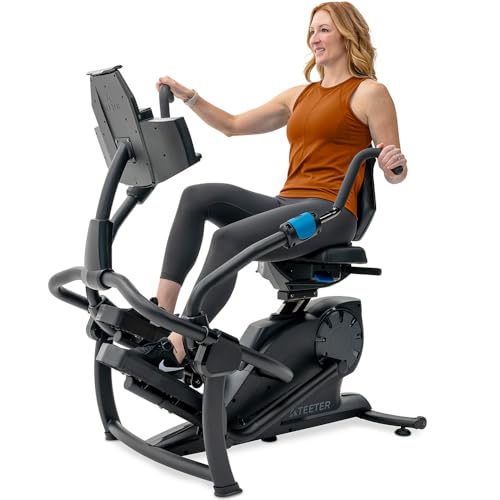
FreeStep Review Summary
The Teeter FreeStep is built for people who want cardio without the repetitive feel of a typical bike.
Its strongest case is the combination of a natural stepping motion, a seated setup, and dual power handles that let you work both sides of the body at once.
That makes it especially relevant for buyers who want a lower-impact option for home exercise and are drawn to physical-therapy-inspired design rather than gym-style intensity.
It is not the simplest cardio machine on paper, and it is not trying to be.
The FreeStep emphasizes comfort, control, and consistency.
If you want a machine that can support longer sessions, offer more variety than a basic pedal bike, and keep the load distributed across arms and legs, this is a strong candidate.
If you want a minimal footprint and a machine that disappears visually, the feature set may be more than you need.
Review Scorecard
| Category | Score | Rationale |
|---|---|---|
| Joint-friendly comfort | 10/10 | The listing centers on zero-impact motion and a seated position that reduces stress on knees, hips, back, and ankles. |
| Full-body engagement | 9/10 | Dual power motion lets you use upper and lower body together instead of relying on legs alone. |
| Workout flexibility | 8/10 | The machine supports arm-only, leg-only, and combined training, plus 21 preset workouts. |
| Training control | 8/10 | Twenty resistance levels and quick-key control make the effort easier to adjust during a session. |
| At-home convenience | 8/10 | The console, media rack, cup holders, transport wheels, and step lock all support regular home use. |
| User-fit range | 9/10 | The stated fit range of 4 ft 11 in to 6 ft 6 in and 350 lb capacity broadens the audience. |
| Value for the right buyer | 8/10 | It looks most compelling for buyers prioritizing comfort, recovery-minded exercise, or low-impact cardio variety. |
Key Features and Specifications of FreeStep
The FreeStep is a recumbent cross trainer with a very specific pitch: it aims to deliver cardio that is easier on the joints than a typical cycling motion.
The listing says it uses a patented natural stride licensed from commercial physiotherapy steppers, which is the core differentiator here.
Teeter also positions it as a zero-impact option for users who want a total-body workout while seated.
Several details reinforce that positioning.
The machine uses dual power motion, so your upper and lower body can work together.
It includes 20 levels of magnetic resistance with console quick-keys, a color LCD screen with seven tracking metrics, and 21 pre-programmed workouts.
There is also Bluetooth heart-rate compatibility, a media rack with USB charging, adjustable height for a phone or tablet, and an app called Teeter Move with subscription-free trainer classes.
The comfort and usability features matter as much as the training features.
The listing highlights UltraGlide bearings for smooth motion, SoftStep pedals with grip, an Extra-Large ComfortMax Seat, electronic step lock for easier entry and exit, dual cup holders, and transport wheels.
Teeter also claims the machine is rated for users from 4 ft 11 in to 6 ft 6 in and up to 350 lb.
In practical terms, that means the FreeStep is not just a machine for short rehab-style sessions.
It is aimed at regular home training, with enough adjustability and support features to make longer workouts more realistic.
Pros and Cons of FreeStep
Pros
- Very joint-conscious design with a seated, zero-impact step motion.
- Upper-body and lower-body training together through dual power handles and pedals.
- Good resistance range with 20 levels for gradual progression.
- Useful home-console extras such as a media rack, USB charging, cup holders, and transport wheels.
- Broad fit range for a home cardio machine.
- App-based trainer workouts without a subscription fee, according to the listing.
Cons
- More complex than a basic exercise bike, so it may feel like overkill if you only want simple pedaling.
- Less compact than minimalist cardio options, based on the feature set and seated cross-trainer layout.
- The main advantage is specific, meaning buyers who do not care about low-impact design may not get the full benefit.
- Some claims are clearly listing-led, so the real experience will depend on assembly, setup, and the user’s needs.
Who Should Buy FreeStep?
This is a good fit for buyers who want low-impact cardio that still feels like a workout.
It is especially appealing if you prefer seated exercise but do not want the limited feel of a conventional recumbent bike.
The FreeStep also makes sense for people who want to spread effort across the whole body instead of loading the legs alone.
It is also well matched to home users who value comfort features.
The adjustable seat, media rack, cup holders, and quiet magnetic resistance are all practical details for a regular workout space.
If you are likely to use the machine while watching classes, listening to audio, or following an app, the layout seems built for that kind of routine.
The strongest buyer fit appears to be people who are sensitive to knee, back, hip, or ankle stress and want a machine designed around that concern.
Teeter explicitly positions it for users with arthritis, Parkinson’s, or MS, and it also says the motion is easier on the knees and back than other cardio options.
You do not need to treat that as a medical promise, but it does show the type of buyer the product is trying to serve.
Who should skip it?
Buyers who mainly want a compact cardio tool, a stripped-down machine, or a more aggressive upright-bike style workout may not need this level of structure.
If you are not interested in the joint-friendly angle, the FreeStep’s biggest advantage becomes less compelling.
How the FreeStep Feels in Real Use
Natural Stride and Body Position
The biggest design choice is the stride.
Teeter says the machine uses a patented natural stride inspired by commercial physiotherapy steppers, and that matters because the motion is meant to feel smoother and less punishing than a repetitive cycle pattern.
The seated position keeps the workout accessible while still giving you a cardio rhythm that can be more engaging than a standard recumbent bike.
Resistance and Workout Variety
Twenty magnetic resistance levels is a meaningful range for a home machine.
It suggests you can start conservatively and still have room to increase difficulty without changing machines.
The 21 preset workouts also add structure for buyers who do not want to design every session themselves.
That combination makes the FreeStep more versatile than a very basic pedal machine.
Console, App, and Daily Convenience
The console package is practical rather than flashy.
Seven tracking metrics, Bluetooth heart-rate compatibility, and a media rack with charging support cover the basics most home users actually use.
The free Teeter Move app adds another layer for buyers who want trainer-led classes without another subscription.
In everyday use, the step lock, cup holders, and transport wheels round out the machine as a home-friendly setup.
Alternatives to FreeStep
If you want a similar seated cardio experience but want to compare different brands or machine styles, a few Amazon-search alternatives make sense.
A Nautilus recumbent bike is a straightforward choice if you want simpler seated pedaling.
A Schwinn recumbent bike is another common route for buyers who want familiar cardio hardware with a more traditional cycling feel.
A Sunny Health & Fitness recumbent bike may suit buyers looking for a more budget-oriented home cardio option.
If you specifically want a cross-trainer style machine, a recumbent elliptical is the broader category to compare against.
Is FreeStep Worth It?
Yes, if your priority is low-impact full-body cardio in a seated format. The Teeter FreeStep stands out because it is not just another recumbent machine; it is built around joint-friendly motion, upper-body involvement, and practical home-use features.
That makes it especially attractive for buyers who want a smoother, more comfort-first way to train.
It is less compelling if you only want the smallest or simplest cardio machine available.
But if the goal is a home workout that feels easier on the body while still giving you resistance, variety, and a real training rhythm, the FreeStep looks worth serious consideration.